Catalog No.
AMB89901
Biological activity
Measured by its ability to enhance IL-6 secretion by human peripheral blood mononuclear cells (PBMC). The ED50 for this effect is typically 0.8-4 µg/mL.
Expression system
E. coli
Species
Mus musculus (Mouse)
Protein length
Ser671-Arg748
Nature
Recombinant
Applications
Bioactivity, ELISA, Immunogen, SDS-PAGE, WB
Endotoxin level
<1 EU/μg of the protein by the LAL method.
Purity
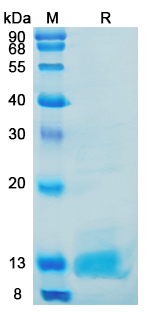
>90% as determined by SDS-PAGE.
Accession
P01027
Form
Lyophilized
Storage buffer
Lyophilized from a solution in PBS pH 7.4
Reconstitution
Reconstitute in sterile water for a stock solution.
Shipping
In general, proteins are provided as lyophilized powder/frozen liquid. They are shipped out with dry ice/blue ice unless customers require otherwise.
Stability and Storage
Use a manual defrost freezer and avoid repeated freeze thaw cycles. Store at 2 to 8°C for one week. Store at -20 to -80°C for twelve months from the date of receipt.
Alternative Names
Complement C3, HSE-MSF, Complement C3 beta chain, C3-beta-c, C3bc, Complement C3 alpha chain, C3a anaphylatoxin, Acylation stimulating protein, ASP, C3adesArg, Complement C3b alpha' chain, Complement C3c alpha' chain fragment 1, Complement C3dg fragment, Complement C3g fragment, Complement C3d fragment, Complement C3f fragment, Complement C3c alpha' chain fragment 2, C3
Note
For research use only.
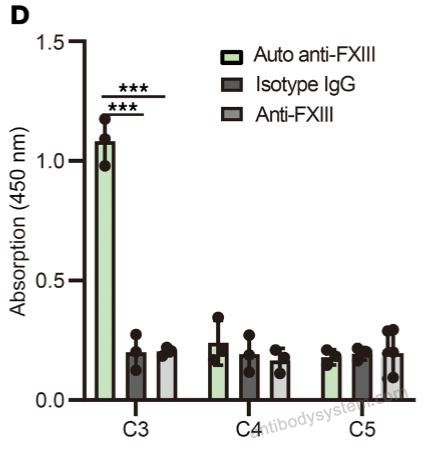
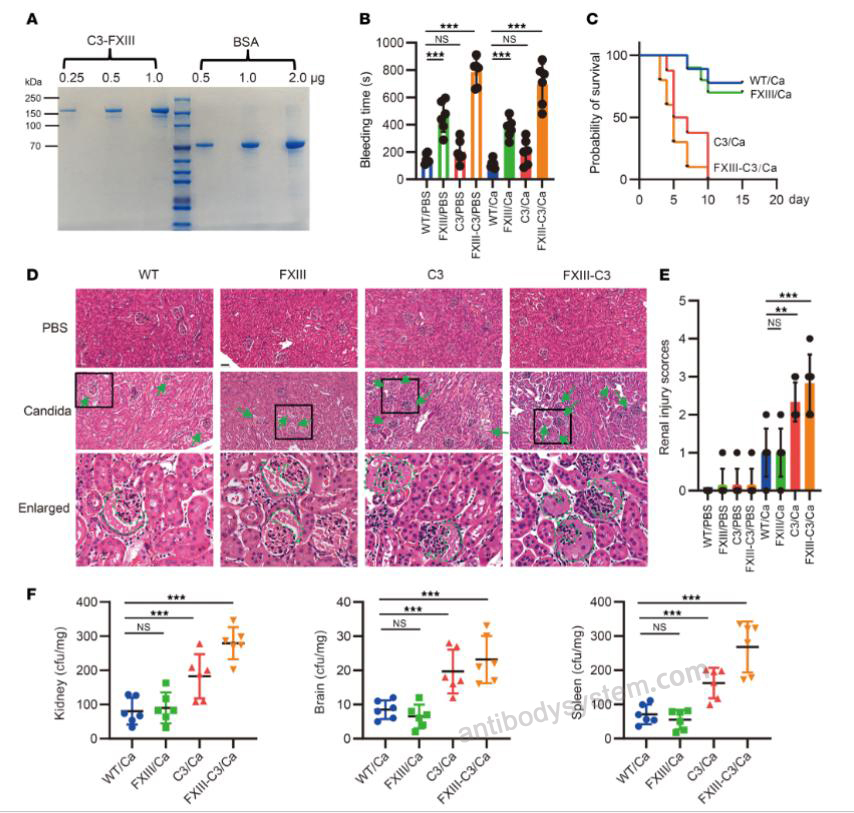
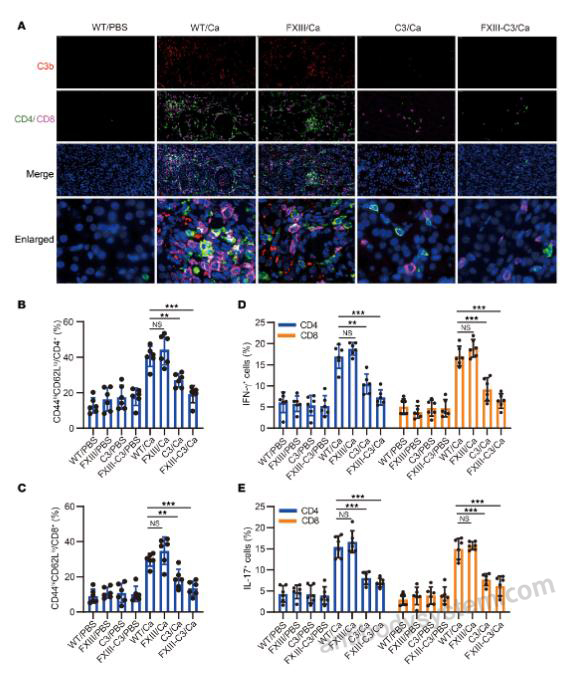
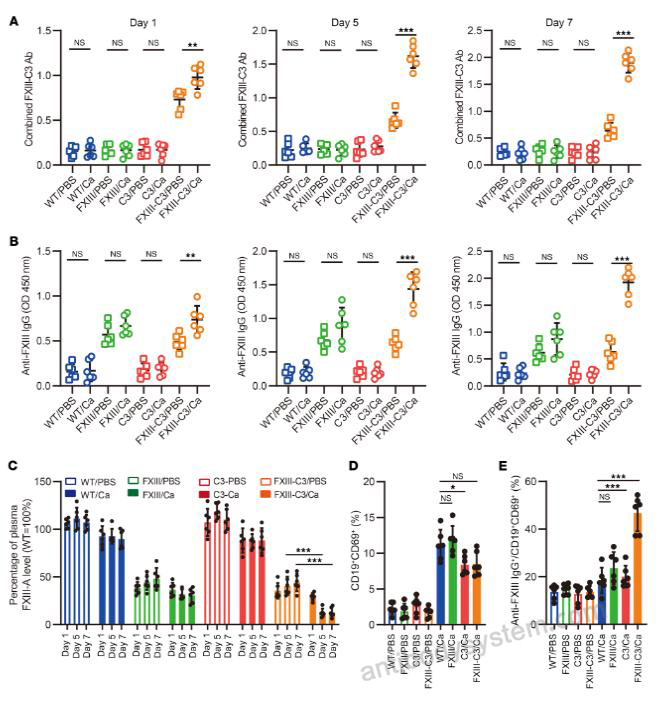
Combined FXIII-C3 autoantibodies elicit bleeding and complement dysfunction in autoimmune FXIII deficiency. [AMB89901]
De novo assembly of multidrug resistant biofilm forming Micrococcus luteus genome from hemodialysis tunneled cuffed catheter tips of patients undergoing renal failure treatment., PMID:40444959
Streptococcus suis AdcA interacts with factor H and inhibits C3b deposition on the bacteria to participate in complement evasion., PMID:40446560
Molecular characterization and environmental response of dissolved organic matter in reserve quiescent groundwater wells of the North China plain: Insights from spectroscopy and mass spectrometry., PMID:40449357
Graphitic carbon nitride/methyl pyrophaeophorbide a-copper/folate nanoconjugate for enhanced immunogenic death combined with PD-L1 immune checkpoint blockades., PMID:40450918
Self-assembly of Urea Derivatives into Supramolecular Gels., PMID:40451817
Pterosin D-activated protein kinase A mitigates Alzheimer's disease in 5xFAD mice., PMID:40452366
Factor H-related 1 and heparan sulfate architecture contribute to complement dysregulation in C3 glomerulopathy., PMID:40453077
Evidence of Heteroepitaxy and Solid Solutions in Lattice Matched Ternary Covalent Organic Framework Systems., PMID:40456694
Integrative transcriptomic and proteomic analyses reveal that carbon metabolism and complement system of Madin Darby Bovine Kidney cells are affected by bovine coronavirus infection., PMID:40457360
Discovery of a Novel and Potent MET Transcription Inhibitor Targeting Promoter G-Quadruplex for the Treatment of NSCLC., PMID:40457545
Association of The Energy-Adjusted Dietary Inflammatory Index and Sjögren's Syndrome: A Cross-Sectional Study., PMID:40458010
Contrasting mediation actions on interactions of phosphorus with lanthanum modified zeolite by terrestrial- and algal-derived dissolved organic matter., PMID:40460526
Caloric restriction mimetic 2-deoxyglucose alters metabolic and transcriptomic phenotype in association with changes in chromatin accessibility in human astrocytes., PMID:40461556
Understanding freezing-induced changes in the protein and fat phases of aged Gouda cheese using Fourier transform infrared and Raman spectroscopy., PMID:40467239
Analysis of human factor H-related gene and protein expressed in rheumatoid arthritis synovium identifies a novel mechanism promoting dysregulated complement pathway activation., PMID:40467630
Complement in anti-glomerular basement membrane glomerulonephritis., PMID:40469278
Complementing muscle regeneration-fibro-adipogenic progenitor and macrophage-mediated repair of elderly human skeletal muscle., PMID:40473693
Chemoselective dual functionalization of proteins via 1,6-addition of thiols to trifunctional N-alkylpyridinium., PMID:40480996
Native globular ferritin nanopore sensor., PMID:40481000
High-fat diet induces pre-eclampsia through dampening cell-autonomous C3 in trophoblasts., PMID:40481230
Treatment with orforglipron, an oral glucagon like peptide-1 receptor agonist, is associated with improvements of CV risk biomarkers in participants with type 2 diabetes or obesity without diabetes., PMID:40481478
Adipocytes promote cancer stemness properties in oral squamous cell carcinoma through C3/C3AR axis and sphingolipid metabolism., PMID:40482908
Clinical and immunopathological assessment of the oral mucosa in coeliac disease: a pilot study., PMID:40483462
[Diagnosis, treatment, and genetic analysis of five cases of primary atypical hemolytic uremic syndrome]., PMID:40484823
Fibroblast activation protein-α is a potential prognostic biomarker related to ferroptosis in head and neck squamous cell carcinoma., PMID:40486494
Elevated eosinophil-to-lymphocyte ratio (ELR) as a predictor of relapse for IgG4-related disease: a retrospective study across a decade., PMID:40488799
Aldo-keto reductase family 1 member C3 (AKR1C3) gene polymorphism (rs12529) is associated with breast cancer in Bangladeshi population: A case-control study and computational investigation., PMID:40489436
Correlation study between clinical phenotypes and autoantibodies in systemic sclerosis in Southwest China., PMID:40489831
Low Carbohydrate Diet Containing Soy Protein and Fish Oil Reduces AOM/DSS-Induced Colon Cancer, in Part, by an Acetate-Mediated Reduction in TH17 Cell Differentiation., PMID:40491066
Biological degradation of graphitic carbon nitride sheets and autophagy induction in macrophages., PMID:40491410
Primary Sjögren's syndrome presenting with non-diffuse membranoproliferative glomerulonephritis-like lesions in cryoglobulinemic glomerulonephritis: a case report., PMID:40491909
Unlocking the therapeutic potential of protocatechualdehyde: pharmacological applications and mechanism insights., PMID:40493248
Geminiviral replication enhancer hijacks a negative regulator of cytokinin signaling to facilitate viral infection., PMID:40495381
Lecanemab Binds to Transgenic Mouse Model-Derived Amyloid-β Fibril Structures Resembling Alzheimer's Disease Type I, Type II and Arctic Folds., PMID:40495448
Perinatal death in pig models of hypertrophic cardiomyopathy carrying sarcomere pathogenic variants., PMID:40496056
BdNRT2A and BdNRT3.2 Are the Major Components of the High-Affinity Nitrate Transport System in Brachypodium distachyon., PMID:40497030
Unraveling the molecular basis of antibiotic resistance in S. aureus focusing on plasmid-mediated mechanisms., PMID:40501247
Scaled multidimensional assays of variant effect identify sequence-function relationships in hypertrophic cardiomyopathy., PMID:40501845
Effects of C3aR activated mast cells in eosinophilic esophagitis., PMID:40502038
Huangqi decoction ameliorated intestinal barrier dysfunction via regulating NF-κB signaling pathway in slow transit constipation model mice., PMID:40502512
Superior Diagnostic Efficacy of N-Terminal Propeptide of Type III Collagen and Golgi Protein 73 for Detection of Fibrosis in Chronic Hepatitis B Patients., PMID:40502814
Discriminating Disease Flare From Infection in Febrile Patients With Systemic Lupus Erythematosus in a Safety-Net Hospital System: A Multicenter Study., PMID:40503665
An Unusual Presentation of Bullous Skin Lesions During Pregnancy., PMID:40503690
Association between Lyn tyrosine kinase and renal injury in patients with systemic lupus erythematosus., PMID:40506261
Immunotherapy Platform That Conjugates Antigen to Complement C3-Targeted Liposomes Induces a Robust Adaptive Immune Response., PMID:40507796
Successful Management of C3 Glomerulopathy Recurrence Post-Kidney Transplantation with Iptacopan: A Case Report., PMID:40507864
Withania somnifera and Chrysanthemum zawadskii Herbich var. latilobum (Maxim.) Kitamura Complex Attenuates Obesity in High-Fat-Diet-Induced Obese Mice., PMID:40508039
Cucurbitane Glycosides and Their Potential Anti-Inflammatory Activities from Hemsleya chinensis Tubers., PMID:40509239
Corydalis yanhusuo Polysaccharides regulates HPA-axis mediated microglia activation and inhibits astrocyte A1 transformation to improve depression-like behavior., PMID:40513699
Synaptic pruning genes networks in Alzheimer's disease: correlations with neuropathology and cognitive decline., PMID:40515808

 For research use only. Not for human or drug use.


