
World Alzheimer's Day Spotlight: Key Biomarkers in Alzheimer's Disease Research
September 21 marks World Alzheimer's Day. As Alzheimer's disease (AD) research continues to advance, early detection of disease-associated changes and accurate monitoring of disease progression remain important challenges in biomedical research.
These challenges have driven extensive investigation into biomarkers, measurable indicators that reflect disease states, biological processes, or pathological changes. In AD research, biomarkers are studied across multiple biological dimensions, including genetic susceptibility, protein pathology, neuroimmune responses, and neurodegeneration, providing a more comprehensive understanding of disease development and progression.
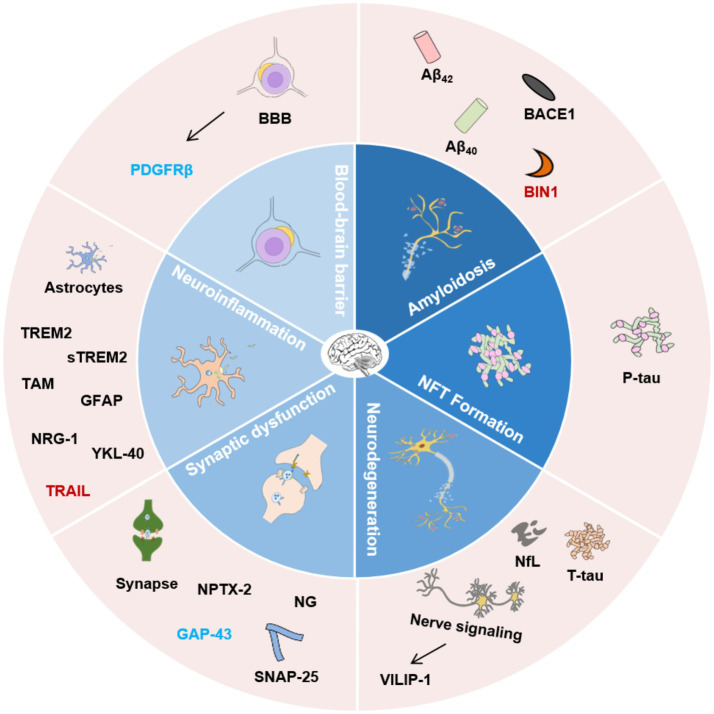
AD biomarkers (PMCID: PMC11039951)
APOE: A Genetic Factor Associated with Alzheimer's Disease Risk
A central question in AD research is:
Why do individuals differ in their susceptibility to Alzheimer's disease?
APOE (Apolipoprotein E) is one of the most extensively studied genetic factors associated with AD risk. APOE plays important roles in lipid transport, cholesterol metabolism, and maintenance of brain homeostasis. Among APOE variants, APOE ε4 (APOE4) is recognized as one of the strongest genetic risk factors associated with AD.
Beyond genetic susceptibility, APOE may also influence multiple biological processes involved in AD, including Aβ metabolism, neuroinflammation, and regulation of the brain microenvironment.
Studies of APOE continue to provide important insights into how genetic variation influences AD susceptibility and disease-related biological pathways.
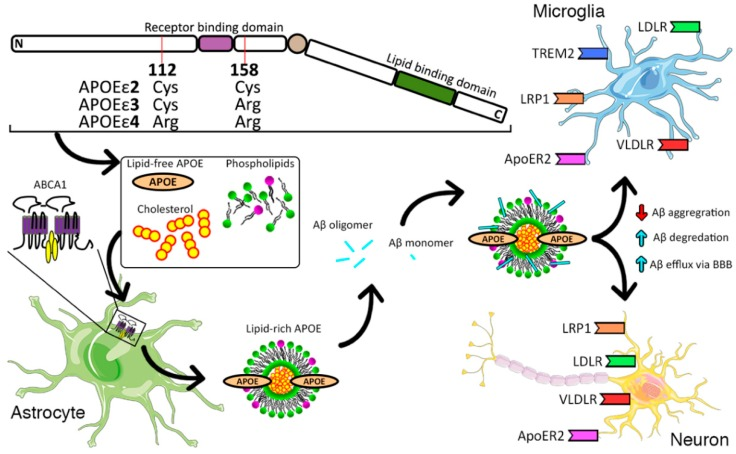
Role of Apolipoprotein E (APOE) in AD (PMID: 30587772)
Aβ: A Key Marker of Amyloid Pathology
Among AD-associated biomarkers, Aβ (Amyloid-β) is one of the earliest and most extensively studied pathological indicators.
Early research identified the accumulation of Aβ into amyloid plaques in the brains of individuals with AD. These findings led to extensive investigation into how Aβ is produced, aggregated, cleared, and how these processes contribute to neuronal dysfunction.
Current studies commonly examine several aspects of Aβ biology, including:
1. The Aβ42/Aβ40 ratio, which reflects alterations in amyloid metabolism;
2. Different Aβ aggregation states, to investigate their relationships with neuronal dysfunction;
3. Aβ production and clearance pathways, to understand mechanisms regulating amyloid homeostasis.
However, Aβ abnormalities alone do not fully explain the neuronal damage observed in AD, which has led to increasing interest in additional pathological mechanisms, particularly Tau-related changes.
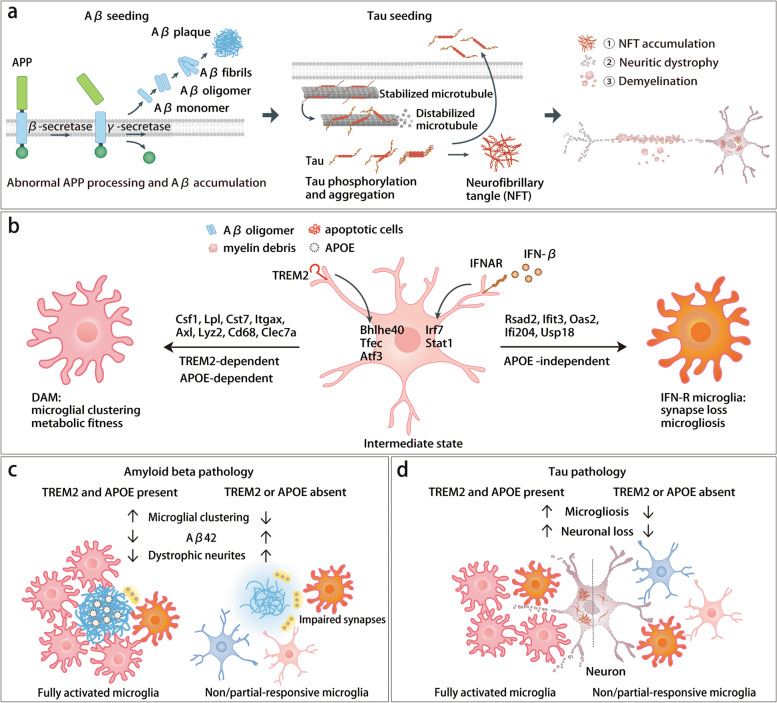
Microglial Characteristics of AD (PMID: 30587772)
Tau and p-tau217: Monitoring Tau-Related Pathology
While Aβ primarily reflects amyloid accumulation, Tau research focuses on how pathological changes affect neuronal structure and function.
Tau is a microtubule-associated protein that maintains neuronal microtubule stability. During AD progression, abnormal Tau phosphorylation can occur, leading to the formation of neurofibrillary tangles (NFTs).
Therefore, AD research investigates not only total Tau levels but also specific phosphorylation events associated with disease pathology.
Common Tau-related biomarkers include:
| Biomarker | Research application |
|---|---|
| Total Tau | Measurement of overall Tau protein levels |
| p-tau181 | A well-established phosphorylated Tau biomarker associated with AD |
| p-tau217 | An emerging Tau biomarker receiving increasing attention in AD research |
Among these markers, p-tau217 has emerged as an important biomarker candidate in recent AD studies.
Analysis of specific Tau phosphorylation sites enables researchers to investigate disease-associated molecular changes with greater resolution and explore their relationship with AD progression.
TREM2 and GFAP: Exploring Neuroimmune Changes in Alzheimer's Disease
For many years, AD research primarily focused on amyloid accumulation and Tau pathology. However, growing evidence indicates that immune cells and glial cells in the brain also play important roles in AD progression.
TREM2 (Triggering Receptor Expressed on Myeloid Cells 2) is predominantly expressed by microglia, the resident immune cells of the central nervous system. TREM2 is involved in maintaining brain homeostasis, regulating immune responses, and mediating the clearance of cellular debris and abnormal molecules.
Current studies investigate how TREM2-associated microglial changes interact with Aβ accumulation, Tau pathology, and neuroinflammatory processes during AD progression.
In addition, GFAP (Glial Fibrillary Acidic Protein) is widely used as a marker of astrocyte activation. Changes in GFAP levels provide insights into glial responses and alterations in the inflammatory environment of the AD brain.
Together, studies of TREM2 and GFAP have expanded AD research beyond protein aggregation, highlighting the contribution of neuroimmune regulation to disease mechanisms.
NfL: A Marker of Neurodegenerative Injury
In addition to identifying pathological changes associated with AD, researchers also investigate whether these molecular alterations lead to measurable neuronal damage.
NfL (Neurofilament light chain) is a neuronal cytoskeletal protein released following axonal injury and has been widely studied as a marker of neurodegeneration across multiple neurological disorders.
In AD research, NfL is commonly evaluated to investigate:
1. Axonal injury and neuronal damage;
2. Progression of neurodegenerative changes;
3. Associations between biomarker changes and disease progression.
Other neuronal and synaptic proteins, including PSD95 and Synaptophysin, are also studied to examine alterations in synaptic integrity and neuronal connectivity during AD progression.
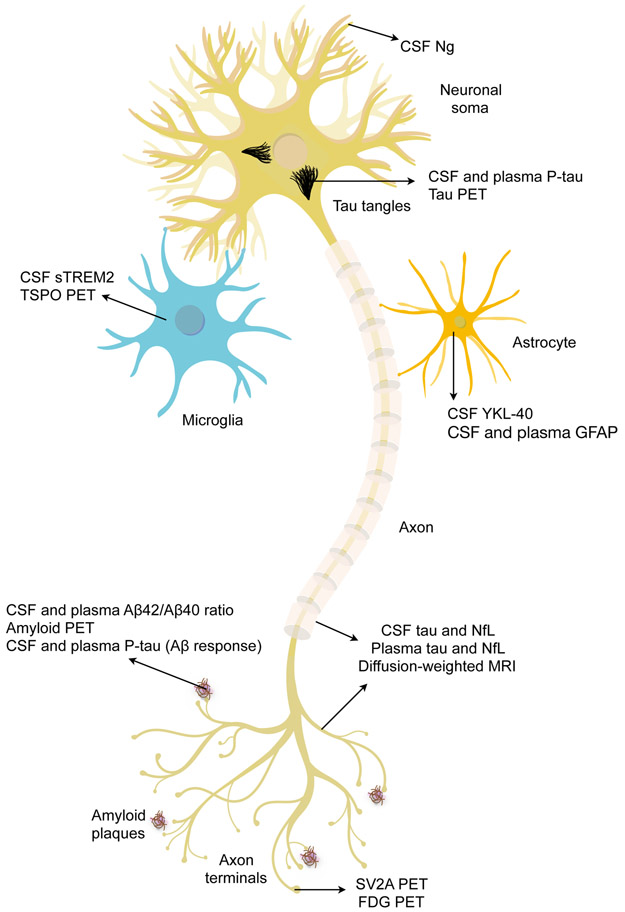
Biomarkers for Ad (PMCID: PMC8172244)
Integrating Multiple Biomarker Categories in AD Research
Current AD research has established a multi-layered biomarker framework. Rather than replacing one another, different biomarkers provide complementary information about distinct biological processes involved in disease development.
| Research area | Biomarker |
|---|---|
| Genetic susceptibility | APOE |
| Amyloid pathology | Aβ42/Aβ40 |
| Tau pathology | Tau, p-tau181, p-tau217 |
| Neuroimmune responses | TREM2, GFAP |
| Neurodegeneration | NFL |
Together, these biomarkers enable researchers to examine AD from multiple biological perspectives, ranging from genetic risk and protein aggregation to immune regulation and neuronal injury.
Research Tools for Alzheimer's Disease Biomarker Studies
AntibodySystem offers antibodies, recombinant proteins, and related research tools targeting AD-associated biomarkers, including Aβ, Tau/p-tau, APOE, TREM2, GFAP, and other neurodegeneration-related targets.
These tools are designed to support studies investigating AD mechanisms, biomarker characterization, and molecular changes associated with neurodegenerative diseases.
| Catalog No. | Product Name |
|---|---|
| VHB98602 | InVivoMAb Anti-Human APOE4 Antibody (HJ15.1) |
| VHB98603 | InVivoMAb Anti-Human APOE3/4 Antibody (HJ15.6) |
| RHC12519 | Anti-APP Antibody (R2Y96) |
| RHC12518 | Anti-APP Antibody (R2Y95) |
| RHC12517 | Anti-APP Antibody (R2Y94) |
| RHC12510 | Anti-Human APP/Amyldod beta Antibody (m266) |
| RHC12506 | Anti-Human Amyloid β Antibody (3D6) |
| RHC82415 | Anti-Human MAPT/Tau/PHF-tau Antibody (h4E6) |
| RHC82416 | Anti-Human MAPT/Tau/PHF-tau Antibody (8B2) |
| RHC82447 | Anti-MAPT/Tau/PHF-tau Antibody (R3C17) |
| RHC82426 | Anti-MAPT/Tau/PHF-tau Antibody (R1A19) |
| PHC82401 | Anti-MAPT Polyclonal Antibody |
| THC82402 | Anti-Human pTau217 Antibody (SAb2454) |
| THC82401 | Anti-Human pTau217 Antibody (SAb2453) |
| DHJ69204 | Research Grade Anti-Human TREM2 Antibody (VGL101) |
| DHJ69203 | Research Grade Anti-Human TREM2 Antibody (PY314) |
| VHJ69201 | InVivoMAb Anti-Human TREM2 Antibody (42E8#) |
| PHJ69201 | Anti-Human TREM2 Polyclonal Antibody |
| RHJ69201 | Anti-Human TREM2 Nanobody (SAA1137) |


