
Uruguay Reports Highly Pathogenic H5 Avian Influenza: New Challenges for H5 Virus Surveillance and Antibody Research
On September 4, 2026, Uruguay's Ministry of Livestock, Agriculture and Fisheries (MGAP) confirmed highly pathogenic H5 avian influenza in backyard poultry in the department of Colonia and declared a nationwide animal health emergency.

▲ Source: ua.news
This is not the first H5 avian influenza event reported in Uruguay this year. In February, highly pathogenic avian influenza was detected in wild birds, prompting nationwide control measures. The emergency was lifted in April after more than 54 days without a new outbreak and with no evidence of ongoing viral circulation.
The recurrence of H5 avian influenza highlights the importance of ongoing surveillance. For viruses that continue to circulate and evolve, surveillance needs to go beyond detecting whether a virus is present. Tracking genetic and antigenic changes is equally important for understanding emerging viral risks.
Why Does H5 Avian Influenza Require Continuous Surveillance?
H5 viruses are genetically diverse and continue to evolve. Different H5 viruses can occur with different neuraminidase subtypes and genetic backgrounds. Among them, H5N1 clade 2.3.4.4b has received particular attention because of its widespread circulation in birds and repeated detection in mammalian hosts.
Since its global expansion, H5N1 clade 2.3.4.4b has been detected in wild birds, poultry, and a growing range of mammalian species. This continued host expansion has increased interest in viral evolution, host adaptation, and antigenic change.
Changes associated with host adaptation have been extensively studied in influenza virus proteins such as PB2. Substitutions including E627K and D701N have been investigated for their roles in viral replication and adaptation in mammalian cells.
Importantly, host adaptation does not necessarily mean antigenic change. For antibody and antigen research, the more relevant question is whether changes in viral surface proteins such as HA and NA affect recognition by existing antibodies.
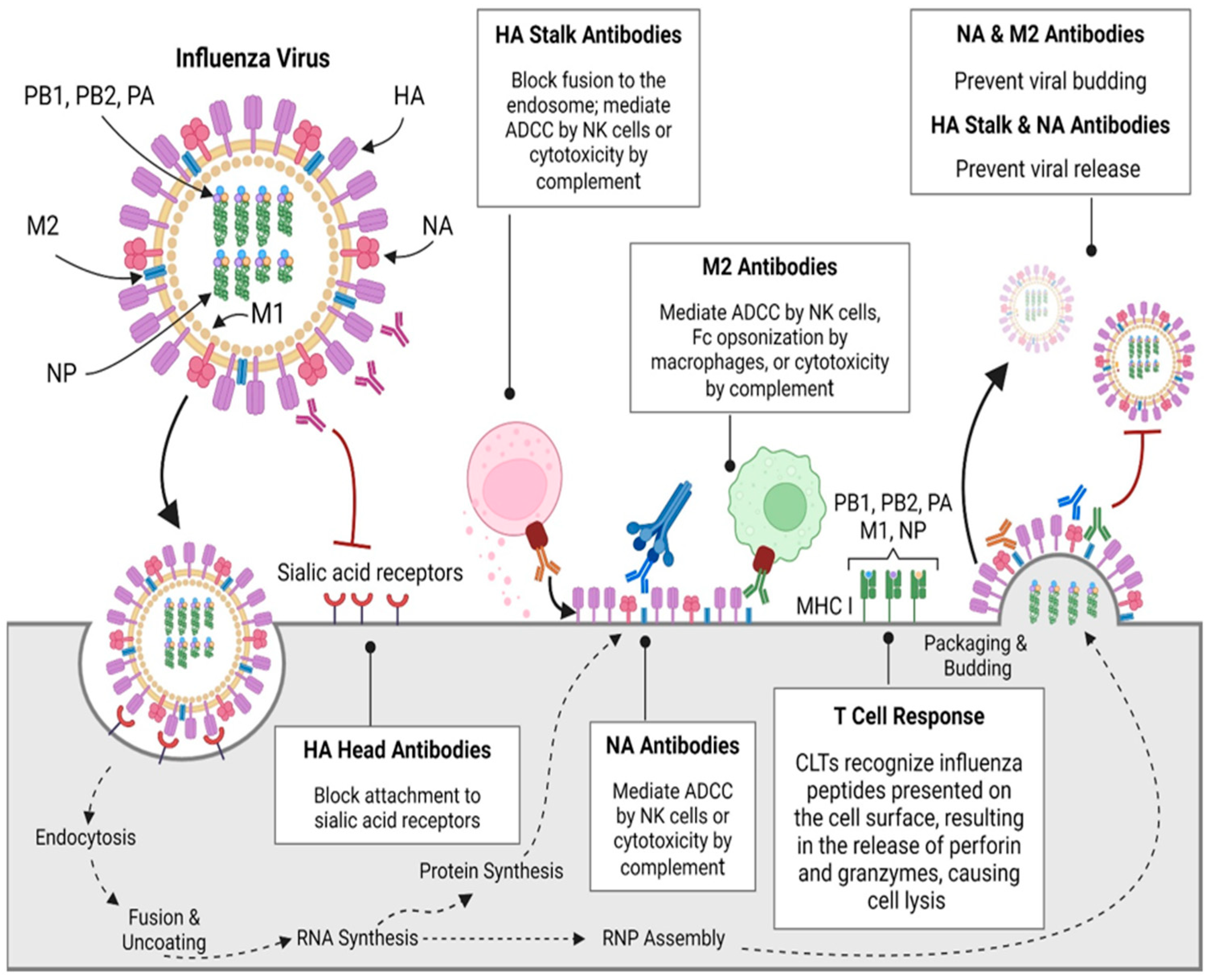
▲ Immune responses to influenza viruses (DOI: 10.3390/vaccines13090890)
Do Existing Antibodies Still Recognize Emerging H5 Strains?
This is an important consideration when studying evolving H5 viruses. An antibody validated against a specific H5 strain or antigen should not automatically be expected to perform identically across different strains. Sequence differences, particularly in or near antibody-binding regions, may alter antigen structure, epitope accessibility, or antibody affinity.
This does not mean that an existing antibody will necessarily lose activity when a virus evolves. Instead, its performance should be considered in the context of the specific antigen and viral strain used in the study.
For H5 research, selecting an antibody based solely on a target designation such as "Anti-H5" or "Anti-Influenza A" may therefore be insufficient. Antigen source, viral strain, recognition site, and intended application should all be taken into account.
For studies involving multiple viral strains, combining sequence analysis with experimental validation can help determine whether an antibody remains suitable for the target antigen.
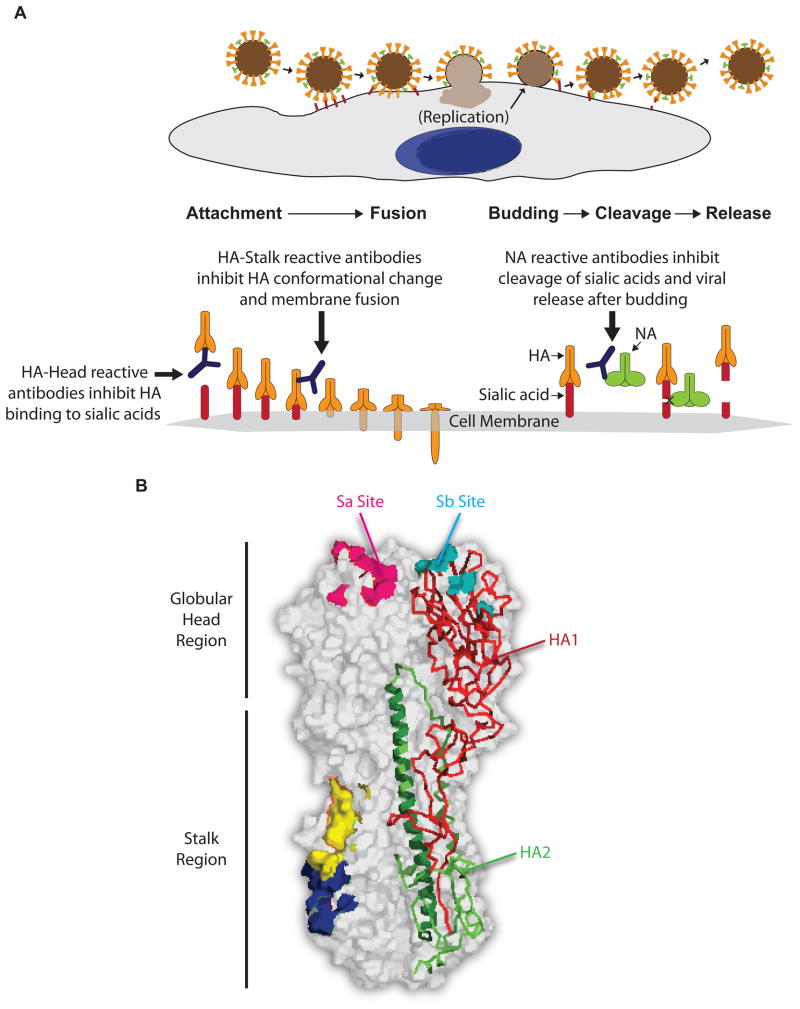
▲ Mode of action of neutralizing antibodies against influenza virus (PMCID: PMC3212832)
Why Can't H5 Virus Surveillance Rely on a Single Detection Method?
H5 surveillance addresses different aspects of viral infection and evolution, and no single method can provide a complete picture.
RT‑PCR and sequencing are primarily used for viral RNA detection and genetic characterization. Antigen‑ and antibody‑based assays provide complementary information on viral proteins and immune recognition.
A comprehensive surveillance strategy therefore combines different approaches: molecular testing detects the virus, sequencing tracks genetic changes, and antigen‑ and antibody‑based assays help evaluate antigenic properties and immune responses.
When viral strains change, existing research reagents may also need to be evaluated against the relevant antigen to confirm their suitability for the intended application.
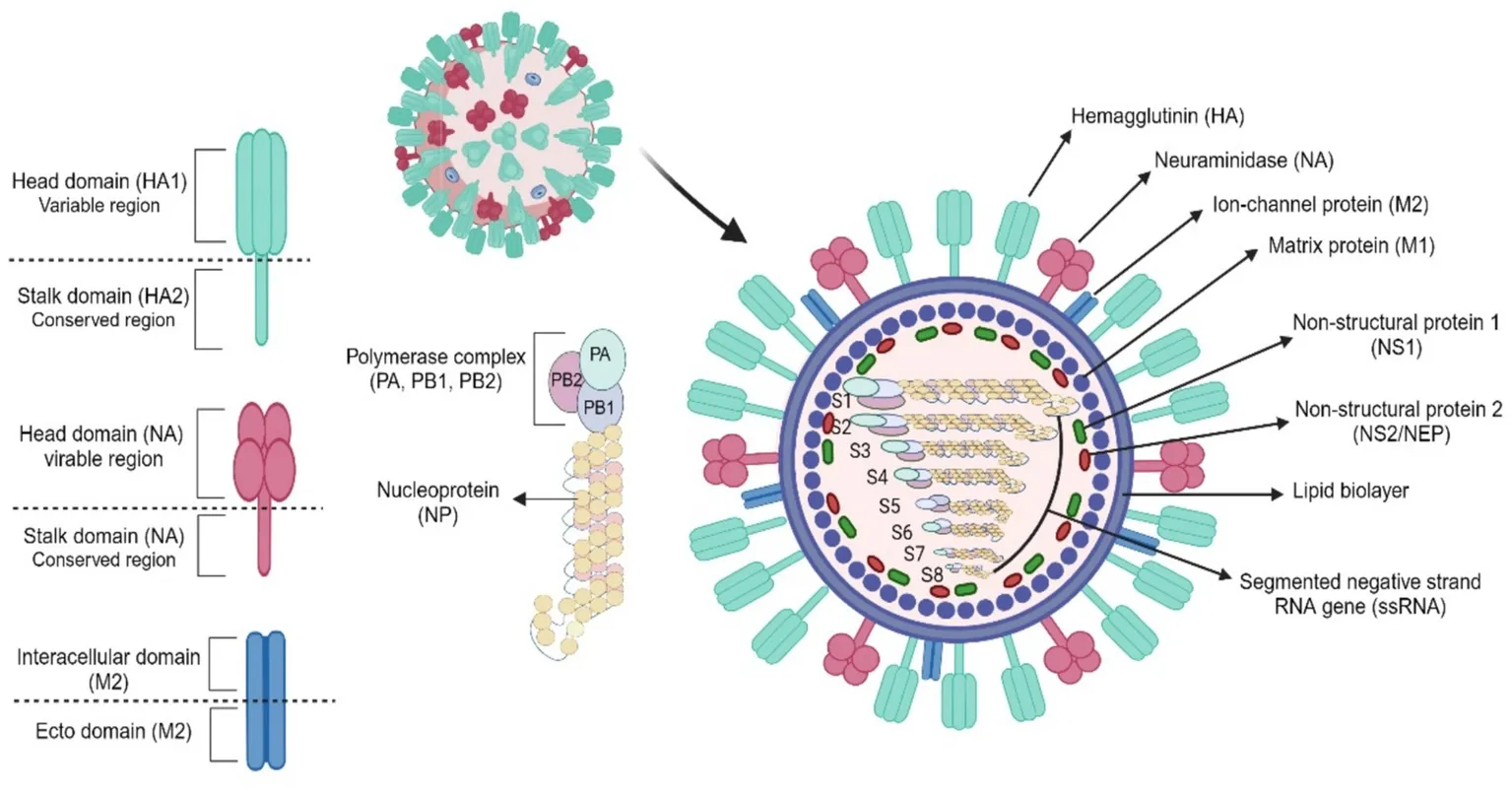
▲ Structure of influenza A virus (PMCID: PMC12833332)
Which Antibodies and Research Tools Are Useful for H5 Studies?
H5 research commonly involves virus detection, antigen characterization, and antibody evaluation. HA and NA are key surface proteins of influenza viruses, and antibodies or recombinant antigens targeting these proteins can support ELISA, antigen detection, antibody‑binding, and neutralization studies.
Because different assays measure different aspects of virus‑antibody interactions, antibodies targeting the same virus are not necessarily interchangeable. The appropriate research tool should be selected based on the target strain, antigen, and experimental application.
AntibodySystem H5 Research Tools
AntibodySystem provides a comprehensive portfolio of recombinant proteins and antibodies targeting H5 antigens, covering multiple strains (H5N1, H5N6) and key proteins (HA, NA, M2e) for antigen detection, antibody‑binding, and functional studies.
| Catalog No. | Product Name |
|---|---|
| YVV24010 | Recombinant Influenza A virus (H5N6) NA/Neuraminidase Protein, N-His |
| YVV23411 | Recombinant Influenza A virus (H5N1) NR (N)-3M2e Protein, N-His |
| YVV23407 | Recombinant Influenza A virus (H5N1) NF (CsgA)-3M2e Protein, N-His |
| YVV23404 | Recombinant Influenza A virus (H5N1) M2e Protein, N-GST & C-His |
| YVV03813 | Recombinant Influenza A virus (H5N1) HA/Hemagglutinin Protein, N-His |
| EVV24009 | Recombinant Influenza A virus (H5N6) NA/Neuraminidase Protein, C-His |
| EVV03835 | Recombinant Influenza A virus (H5N6) HA/Hemagglutinin Protein, C-6His |
| EVV03805 | Recombinant Influenza A virus (H5N1) HA/Hemagglutinin Protein, C-His |
| VVV03811 | Anti-Influenza A virus (H5N1) HA/Hemagglutinin Antibody (D04) |
| VVV03810 | Anti-Influenza A virus (H5N1) HA/Hemagglutinin Antibody (13D4) |
| RVV03801 | Anti-Influenza A virus (H5N1) HA/Hemagglutinin Antibody (SAA2067) |
| PVV24010 | Anti-Influenza A virus (H5N6) NA/Neuraminidase Polyclonal Antibody |
| PVV23404 | Anti-Flu A/H5N1 M2e Polyclonal Antibody |
| PVV03801 | Anti-Influenza A virus (H5N1) HA/Hemagglutinin Polyclonal Antibody |
Validated Research Tools for Evolving H5 Viruses
The latest H5 avian influenza event in Uruguay is another reminder that surveillance of H5 viruses is an ongoing process. As these viruses continue to circulate and evolve, researchers need to monitor not only their presence but also changes in their genetic and antigenic properties.
From virus detection and sequence analysis to antigen characterization and antibody validation, complementary approaches provide a more complete view of viral changes and immune recognition.
For H5 research, the key is not simply selecting an antibody against the right target. It is ensuring that the research tool is suitable for the antigen, viral strain, and experimental application.
References
- Brock N et al. Avian influenza A(H5N1) isolated from dairy farm worker, Michigan.
- Study Confirms Airborne Spread of H5N1 Influenza Virus. www.emjreviews.com
- Targeting B cell responses in universal influenza vaccine design
- Influenza Virus: Global Health Impact, Strategies, Challenges, Role of Nanotechnology in Influenza Vaccine Development
- Broadly neutralizing monoclonal antibodies against influenza A viruses: current insights and future directions


