
Influenza Virus (Flu)
Viral Structure, Key Antigen Targets and Research Applications
 Influenza virus structure
 Overview of Influenza Virus
Influenza virus is an enveloped, negative-sense single-stranded RNA virus belonging to the family Orthomyxoviridae. It is one of the most important respiratory pathogens worldwide, causing seasonal influenza epidemics and occasional global pandemics.
Influenza viruses are classified into four types: Influenza A, Influenza B, Influenza C, and Influenza D viruses based on their antigenic characteristics and genome organization. Among them, Influenza A and Influenza B viruses are the major causes of seasonal influenza infections in humans.
The influenza virus genome consists of segmented RNA molecules encoding multiple structural and non-structural proteins involved in viral attachment, entry, replication, assembly, and immune evasion.
Among these viral proteins, Hemagglutinin (HA), Neuraminidase (NA), and Matrix protein 2 ectodomain (M2e) are important antigenic targets widely studied in influenza vaccine development, antibody research, antiviral studies, and immunological assays.
Influenza Virus Structure
Influenza virus particles consist of a lipid envelope, surface glycoproteins, matrix proteins, ribonucleoprotein complexes, and segmented viral RNA genome.
- Due to its essential role in viral infection and immune recognition, HA is one of the most important influenza research targets.
- NA is widely investigated for antiviral mechanism studies, antibody development, viral characterization, and drug resistance research.
- M2e-specific antibodies are widely studied for influenza A virus antigen detection, antibody characterization, universal vaccine research, and immune response analysis.
- Due to its high conservation among influenza virus strains, NP is commonly used as a target for influenza virus detection, viral replication studies, and immunological analysis.
- M1/M2 are key targets for viral lifecycle studies and antiviral drug development.
- Research targeting polymerase proteins provides insights into influenza virus replication mechanisms, evolution, and host adaptation.
Key Influenza Virus Research Targets
| Target | Biological Function | Research Applications |
|---|---|---|
| HA Protein | Mediates viral attachment and membrane fusion | Neutralizing antibody studies, vaccine research, antigen characterization |
| NA Protein | Promotes viral release from infected cells | Antiviral research, antibody development, viral characterization |
| M2e Protein | Conserved extracellular domain of M2 ion channel | Antibody development, antigen detection, universal vaccine research |
| NP Protein | Forms ribonucleoprotein complexes with viral RNA | Virus detection, replication studies |
| M1/M2 Protein | Regulates viral assembly and entry | Viral lifecycle studies, antiviral research |
| PB1/PB2/PA Proteins | Mediates viral RNA transcription and replication | Viral replication and evolution studies |
Citation
AntibodySystem influenza virus-related products have been cited in peer-reviewed publications, supporting influenza virus antigen research, antibody evaluation, and immunological studies.
| DOI | Research Focus | Cat. No. | Product Name | Validation Data |
|---|---|---|---|---|
| 10.1016/j.ijbiomac.2025.149867 | Influenza A virus M2e antigen research and vaccine-related studies | RVV23403 | Anti-Influenza A virus M2 ectodomain/M2e Antibody (Fab65) | IF |
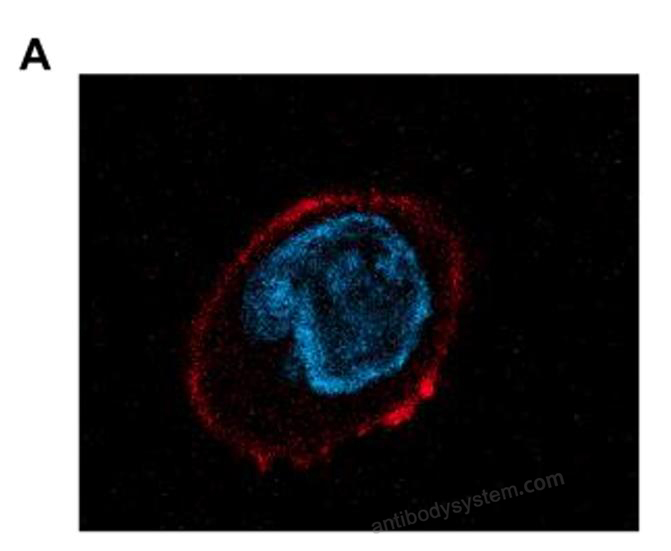
Validation data: Immunofluorescence staining with RVV23403
AntibodySystem Influenza Virus (Flu) Products
AntibodySystem provides recombinant antigens, antibodies, and ELISA kits targeting key influenza virus proteins to support influenza research, antigen characterization, antibody evaluation, and assay development.


