
GPNMB-Directed CAR-T Therapy Redefining Target Selection for Solid Tumor Immunotherapy
Over the past decade, few technologies have generated as much excitement in oncology as CAR-T cell therapy. It has delivered durable remission for some patients with leukemia and lymphoma and has brought the concept of "living cell drugs" into clinical practice.
However, when CAR-T therapy moved beyond hematological malignancies and entered the field of solid tumors, the story became completely different.
To date, hundreds of clinical studies investigating CAR-T therapies for solid tumors have been initiated worldwide. Almost every major target, including HER2, EGFR, Mesothelin, and Claudin18.2, has been explored. Yet, truly successful examples comparable to CD19 CAR-T therapy remain extremely rare.
Many researchers believe that the major challenge lies in the complexity of the solid tumor microenvironment. Others argue that insufficient tumor infiltration by CAR-T cells limits therapeutic efficacy. These challenges certainly exist, but an increasing number of studies suggest that the fundamental problem may begin even earlier.
If the initial target selection is suboptimal, even the most sophisticated CAR designs may not overcome downstream limitations.
A recent study published in Nature Cancer, titled "GPNMB-directed CAR T cell therapy against MiT/TFE-family fusion-driven solid tumors," took a different approach. Instead of further optimizing CAR architecture, the researchers returned to the most fundamental question:
What characteristics make a protein an ideal target for CAR-T therapy in solid tumors?

The goal was not to find the highest-expressed protein, but the most persistent one
Historically, CAR-T target discovery has often focused on comparing protein expression levels. Targets with the highest expression were usually considered the most promising candidates.
However, this study proposed a different perspective.
High expression alone does not necessarily make a target suitable for CAR-T therapy. The key factor is whether the antigen can remain consistently present during treatment.
If tumor cells express a target at the beginning of therapy but lose it weeks later through antigen escape, even highly effective CAR-T cells will gradually lose their ability to recognize and eliminate tumor cells.
Therefore, the authors focused on a distinct class of proteins: those whose expression is directly controlled by oncogenic driver events rather than simply increased during tumor progression.
Alveolar soft part sarcoma (ASPS) is characterized by the ASPSCR1-TFE3 fusion gene, which continuously activates downstream transcriptional programs. Among these downstream targets, GPNMB demonstrated remarkably stable surface expression.
This means that as long as the fusion-driven oncogenic program remains active, GPNMB is unlikely to disappear.
Compared with conventional solid tumor targets, GPNMB acts more like a continuously illuminated "navigation signal" for CAR-T cells.
The researchers further validated this finding using patient-derived tumor samples. Across primary and metastatic lesions, different patients, and different disease stages, GPNMB maintained high and uniform expression levels.
For CAR-T therapy, this represents one of the most desirable characteristics of an antigen target.
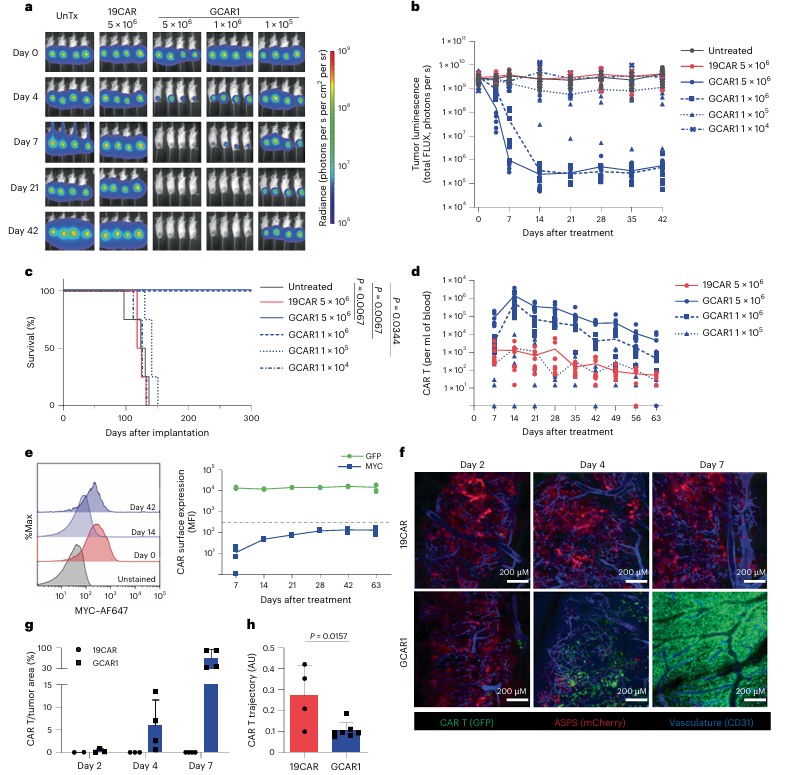
In vivo activity of GCAR1 in a mouse model of primary ASPS
GCAR1 demonstrates potent antitumor activity in vivo
After identifying GPNMB as a promising target, the researchers did not immediately move into animal studies. Instead, they systematically addressed several critical questions.
First, could GCAR1 specifically recognize GPNMB?
In vitro experiments demonstrated that GCAR1 efficiently eliminated GPNMB-positive tumor cells and induced strong secretion of effector cytokines, including IFN-γ and IL-2, indicating robust CAR-T cell activation.
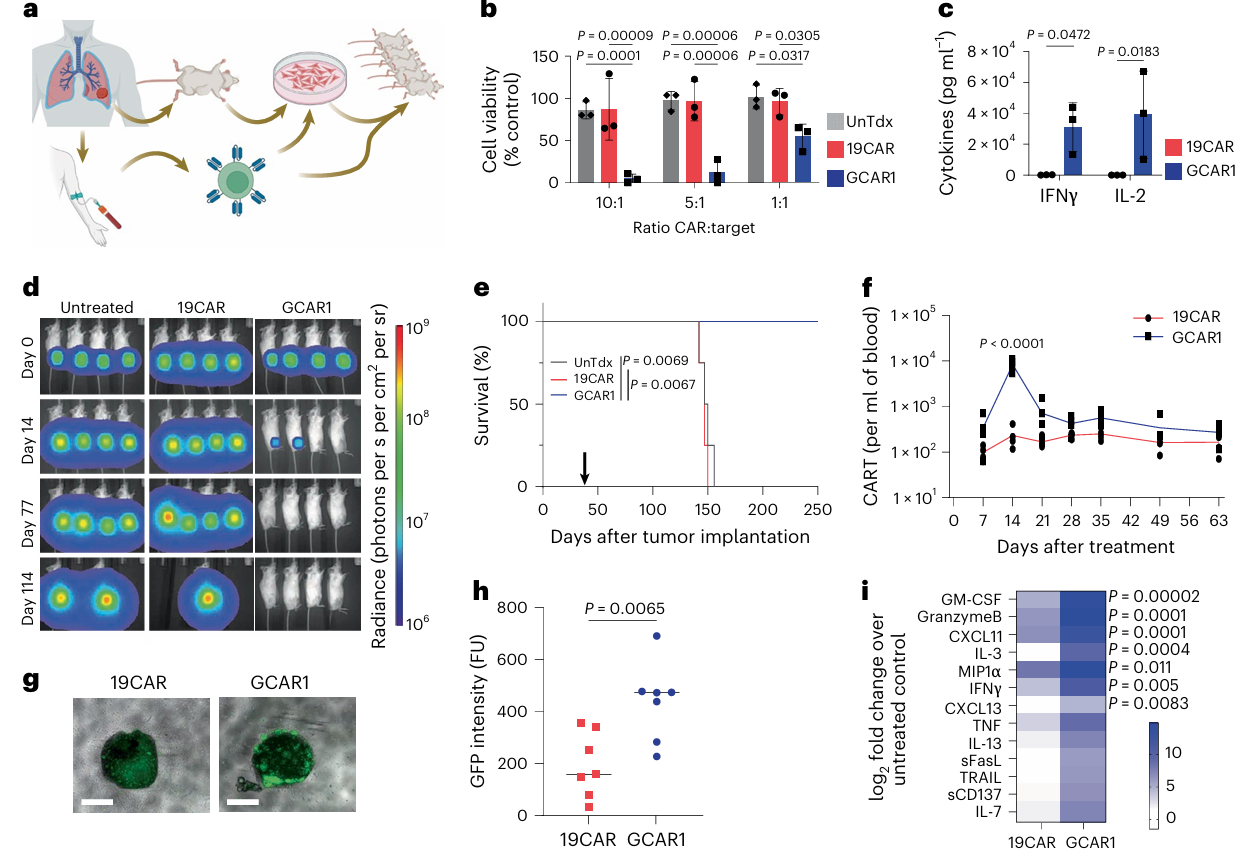
Participant-derived GCAR1 eradicates MiT/TFE-family fusion driven cancers in matched preclinical models
The researchers then evaluated GCAR1 in an ASPS mouse model.
Compared with control groups, mice treated with GCAR1 showed significant tumor growth inhibition, with multiple animals achieving sustained tumor control.
These results confirmed that GPNMB is not only recognizable by CAR-T cells but also capable of supporting durable antitumor responses.
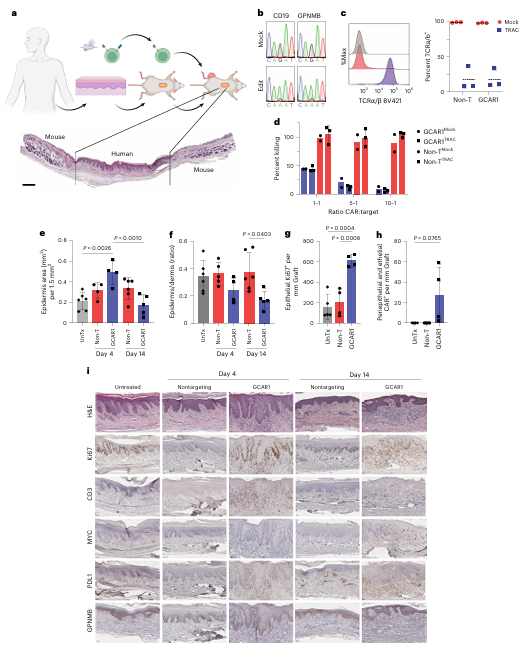
GCAR1 toxicity testing on split-thickness human skin grafts.
Participant-derived GCAR1 eradicates MiT/TFE-family fusion-driven cancers in matched preclinical models
However, if the study had ended at this stage, it would have represented only another promising CAR-T development study.
What elevated this work to the level of Nature Cancer was the researchers' continued investigation into a deeper question:
Why were some tumors not completely eliminated?
Many studies stop after demonstrating successful tumor suppression in animal models. In contrast, the authors investigated the mechanisms behind incomplete responses.
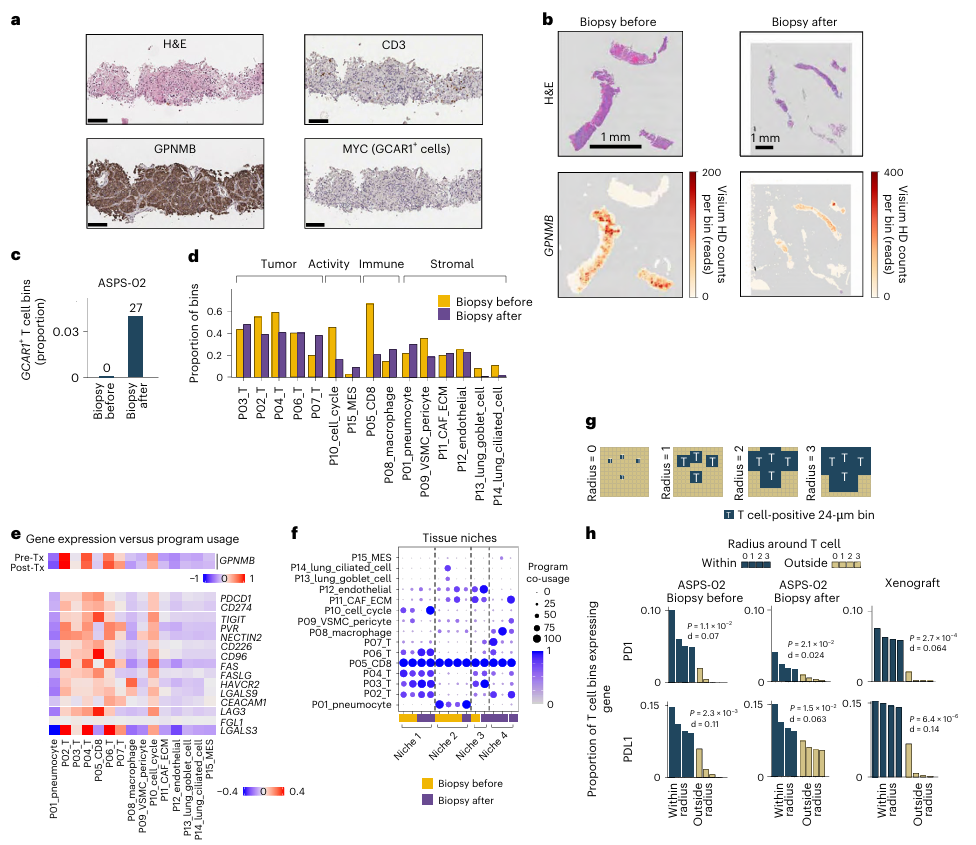
They analyzed residual tumors using advanced spatial profiling approaches, including Spatial Transcriptomics, combined with IHC and IF.
The results were unexpected.
Residual tumor cells still expressed GPNMB.
This indicated that treatment failure was not caused by antigen loss or inability of CAR-T cells to recognize the target.
The real challenge existed within the tumor microenvironment.
Spatial mapping of immunosuppressive niches in refractory tumors
Spatial transcriptomic analysis revealed that many CAR-T cells accumulated at tumor margins and around blood vessels but failed to efficiently penetrate into the tumor core.
Meanwhile, immunosuppressive molecules including PD-L1 and TIGIT were continuously elevated.
Cancer-associated fibroblasts (CAFs), macrophages, and vascular-associated cells collectively formed a complex immunosuppressive barrier that weakened CAR-T cell activity.
In simple terms:
CAR-T cells were not unable to defeat the tumor — they were unable to effectively reach the tumor cells.
This represents one of the most important discoveries of the study.
Spatial mapping of immunosuppressive niches in refractory tumors
Future solid tumor CAR-T therapy may require more than better CAR designs
Since the major limitation was associated with the tumor microenvironment, the researchers explored strategies to overcome these barriers.
They combined GCAR1 therapy with PD-L1 blockade and further engineered CAR-T cells to modulate inhibitory signaling pathways involving PD-1 and TIGIT.
The results demonstrated that both immune checkpoint blockade and intrinsic CAR-T optimization enhanced antitumor activity.
These findings suggest that the future of solid tumor CAR-T therapy may not rely solely on improving CAR structures.
Instead, successful therapies may require coordinated strategies integrating:
- CAR-T cell engineering
- Immune checkpoint inhibition
- Tumor microenvironment remodeling

Polyclonal GCAR1 CAR T cell expansion in blood
Fusion-directed Surfaceome: a new strategy for CAR-T target discovery
A particularly important concept introduced by the authors is "Fusion-directed Surfaceome."
Traditionally, researchers searched for proteins with the highest tumor expression.
However, future target discovery may focus more on proteins that are:
- Directly controlled by oncogenic driver events
- Highly stable during tumor evolution
- Less likely to undergo antigen escape
This strategy could extend beyond ASPS and provide new opportunities for developing CAR-T therapies against additional fusion-driven solid tumors.
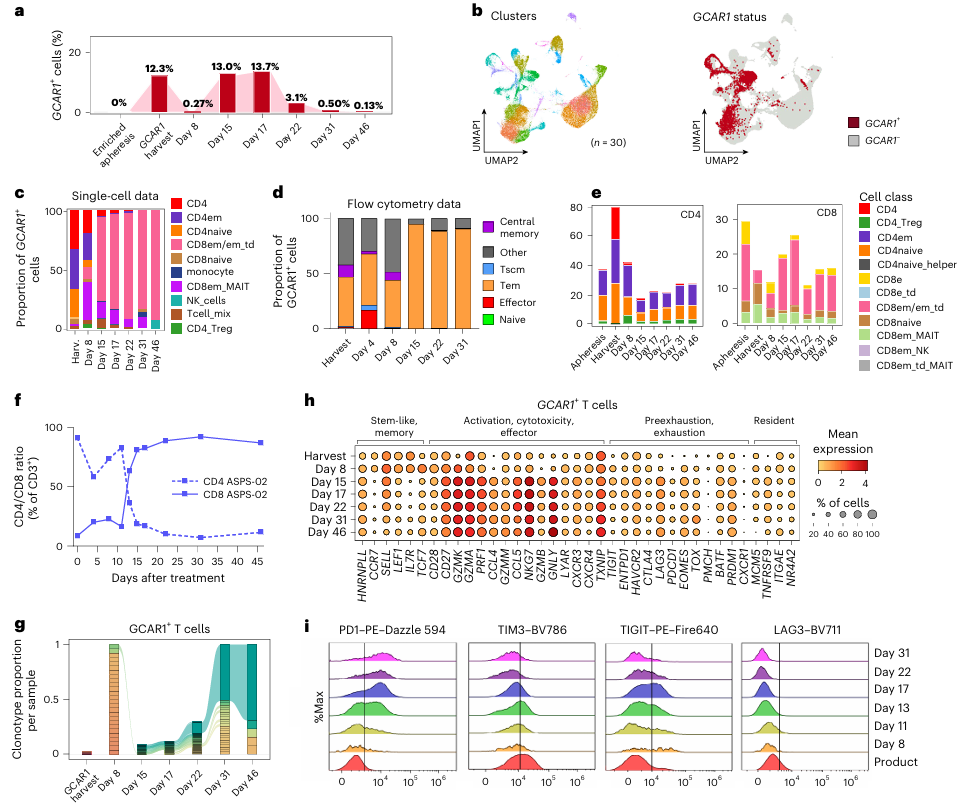
Polyclonal GCAR1 CAR-T cell expansion in blood
For CAR-T research, the significance of this Nature Cancer study extends beyond identifying a new candidate target, GPNMB.
More importantly, it provides a new framework for selecting solid tumor CAR-T targets:
Instead of searching for the antigen with the highest expression, researchers should identify antigens that are the most stable and least likely to disappear during therapy.
From target discovery to mechanism investigation, the research team integrated multiple approaches, including IHC, IF, Flow Cytometry, Western Blot, and Spatial Transcriptomics, to systematically evaluate GPNMB expression, CAR-T function, and tumor immune microenvironment characteristics.
AntibodySystem solution
For CAR-T and tumor immunology research, AntibodySystem provides research-grade antibodies and recombinant proteins targeting immune checkpoints, CAR-T-related targets, tumor biomarkers, and cytokines. These products are widely applicable for Flow Cytometry, IHC, IF, Western Blot, and ELISA applications, supporting reliable research workflows in CAR-T development and tumor immunology studies.


