
Introduction
Tumor-associated macrophages (TAMs) have long been regarded as key drivers of immunosuppression within the tumor microenvironment (TME), making them an attractive therapeutic target. Early strategies largely focused on reducing TAM abundance, under the assumption that their elimination would relieve immune suppression and enhance anti-tumor immunity.
However, clinical outcomes over the past decade have challenged this paradigm. Despite promising preclinical results, therapies targeting TAM depletion—such as CSF1R inhibitors or blockade of the CCL2–CCR2 axis—have failed to deliver durable clinical benefit.
A recent review Macrophages: Targets for next-generation cancer immunotherapy published in Cancer Cell by Miriam Merad and Brian Brown provides a comprehensive reassessment of TAM biology and therapeutic targeting strategies. The central argument is clear:
The limitation is not the target itself, but an oversimplified understanding of TAM heterogeneity and function.
Advances in single-cell and spatial transcriptomics have fundamentally reshaped our view of TAMs, revealing them as a highly heterogeneous and dynamic cellular ecosystem rather than a uniform population.
Multidimensional Heterogeneity of TAMs
TAM diversity is shaped by multiple layers, including developmental origin, transcriptional programs, spatial distribution, and functional states.
Two major ontological sources contribute to TAM populations:
- Tissue-resident macrophages (RTMs), derived from embryonic progenitors and maintained through self-renewal
- Monocyte-derived macrophages (mo-macs), recruited from circulating monocytes during tumor progression
These populations differ not only in localization but also in temporal function. RTMs often participate in early tumorigenesis, while mo-macs dominate in established tumors.
Single-cell transcriptomic analyses have identified three conserved TAM subsets across tumor types:
- CXCL9⁺ TAMs, characterized by IFN-γ signaling and associated with anti-tumor immunity
- SPP1⁺ TAMs, enriched in hypoxic regions and linked to immunosuppression and poor prognosis
- TREM2⁺ TAMs, whose function is highly context-dependent
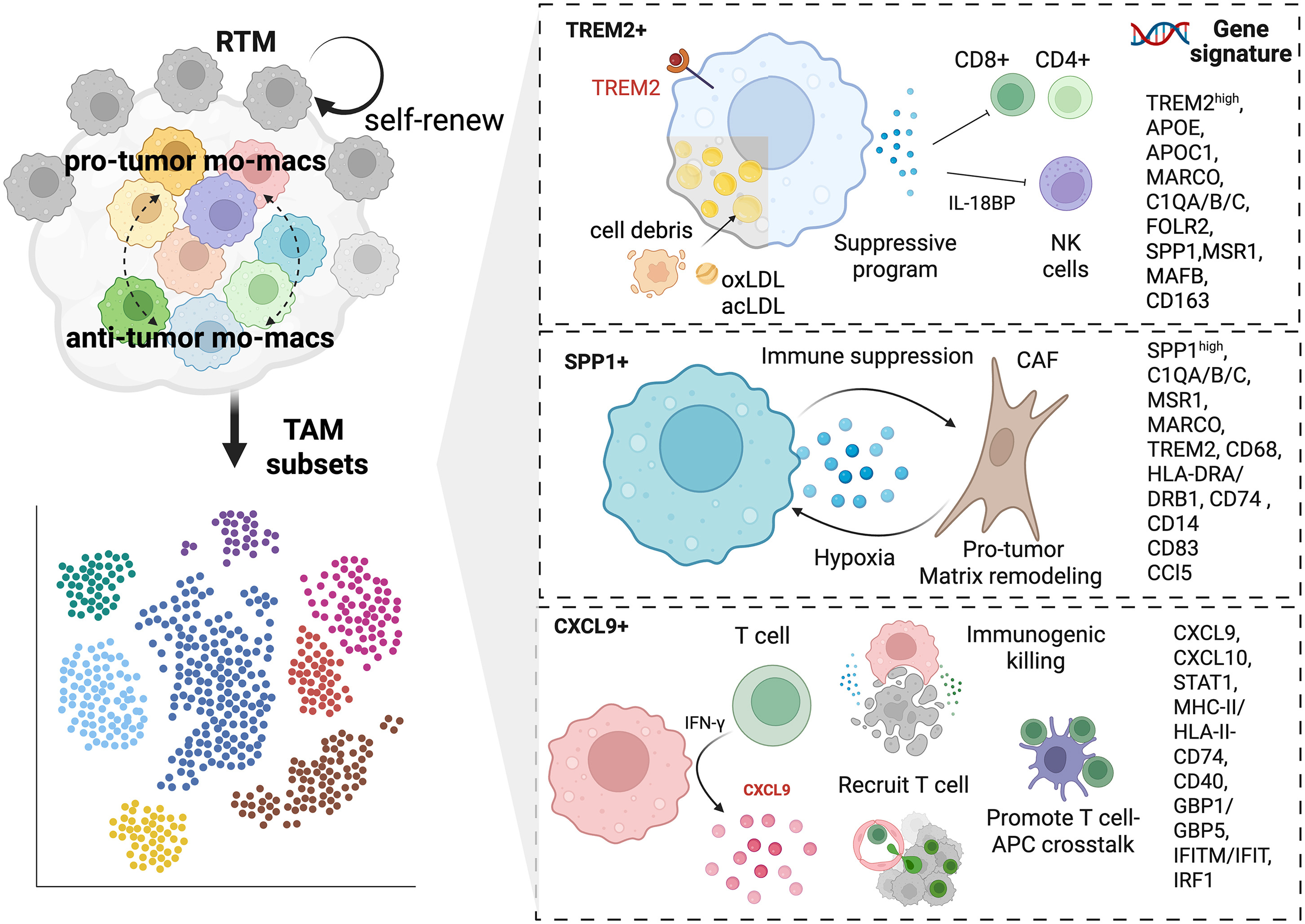
Importantly, similar transcriptional signatures do not necessarily translate into consistent functional outcomes across different tumor contexts, underscoring the need for integrated, multi-dimensional characterization.
Why TAM Depletion Strategies Failed
The failure of first-generation TAM-targeting approaches can be attributed to two fundamental issues.
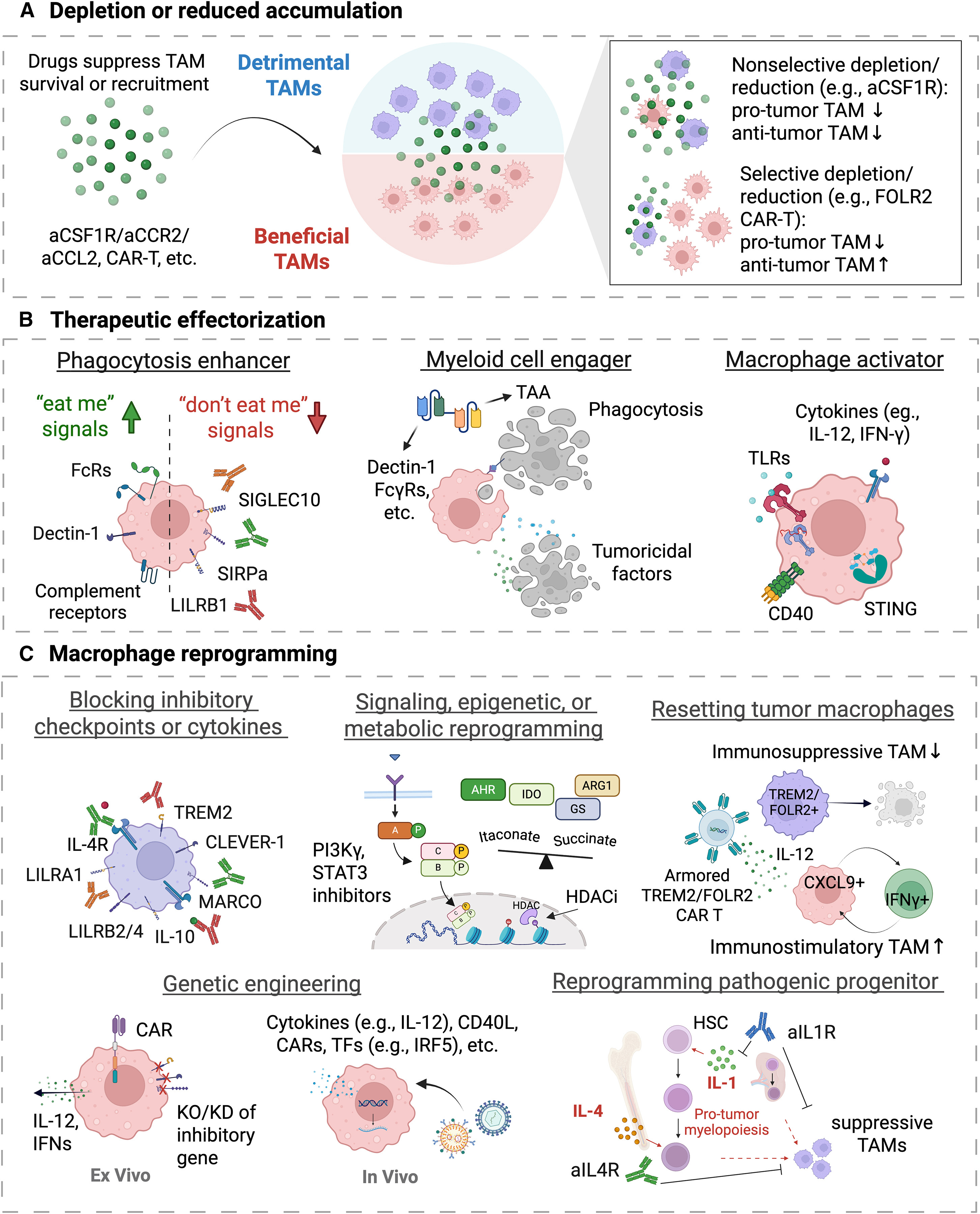
First, lack of selectivity. Broad depletion strategies eliminate both tumor-promoting and tumor-restraining macrophage subsets, thereby disrupting potentially beneficial immune functions.
Second, and more critically, the tumor microenvironment exhibits strong compensatory plasticity. Upon TAM depletion, alternative immunosuppressive populations—such as polymorphonuclear myeloid-derived suppressor cells (PMN-MDSCs)—are rapidly recruited to restore immune suppression.
This highlights a key principle:
Tumor immunity is governed by a dynamic and adaptive network, rather than a linear hierarchy of cell types.
A Paradigm Shift: Effectorization and Reprogramming
Emerging strategies now focus on harnessing TAM plasticity through two complementary approaches.
Effectorization
Effectorization aims to rapidly activate macrophage tumoricidal functions.
Representative strategies include:
- Blocking the CD47–SIRPα "don't eat me" signal
- Enhancing phagocytosis via macrophage-engaging bispecific antibodies (MCEs)
- Activating innate immune pathways (e.g., TLR and STING agonists)
While these approaches can induce rapid anti-tumor responses, their efficacy is often limited by systemic toxicity and adaptive resistance mechanisms.
Reprogramming
In contrast, reprogramming seeks to induce sustained phenotypic and functional changes in TAMs.
This can be achieved through:
- Cytokine pathway modulation (e.g., IL-4, IL-10, TGF-β blockade)
- Metabolic rewiring (e.g., targeting HIF-1α or itaconate pathways)
- Genetic engineering approaches, including CAR-macrophages (CAR-M) and in vivo mRNA delivery
Unlike effectorization, reprogramming has the potential to reshape not only existing TAMs but also their progenitors, leading to durable remodeling of the tumor immune landscape.
The T Cell–TAM Axis: An Alternative Killing Pathway
A key conceptual advance highlighted in this review is the identification of a T cell–macrophage cooperative axis.
In tumors with defective antigen presentation (e.g., MHC loss), CD8⁺ T cells are unable to directly recognize and kill tumor cells. However, CD4⁺ T cells can still secrete IFN-γ, which activates macrophages.
Activated TAMs upregulate inducible nitric oxide synthase (iNOS), leading to the production of nitric oxide (NO), a potent cytotoxic molecule capable of directly killing tumor cells.
This establishes an alternative tumor-killing pathway, independent of classical T cell cytotoxicity.
Importantly, this mechanism has been observed across multiple therapeutic contexts, including vaccination, adoptive T cell transfer, and CAR-T therapy.
Reprogramming at the Source: Tumor-Driven Myelopoiesis
Beyond local reprogramming, tumors can systemically reshape hematopoiesis in the bone marrow.
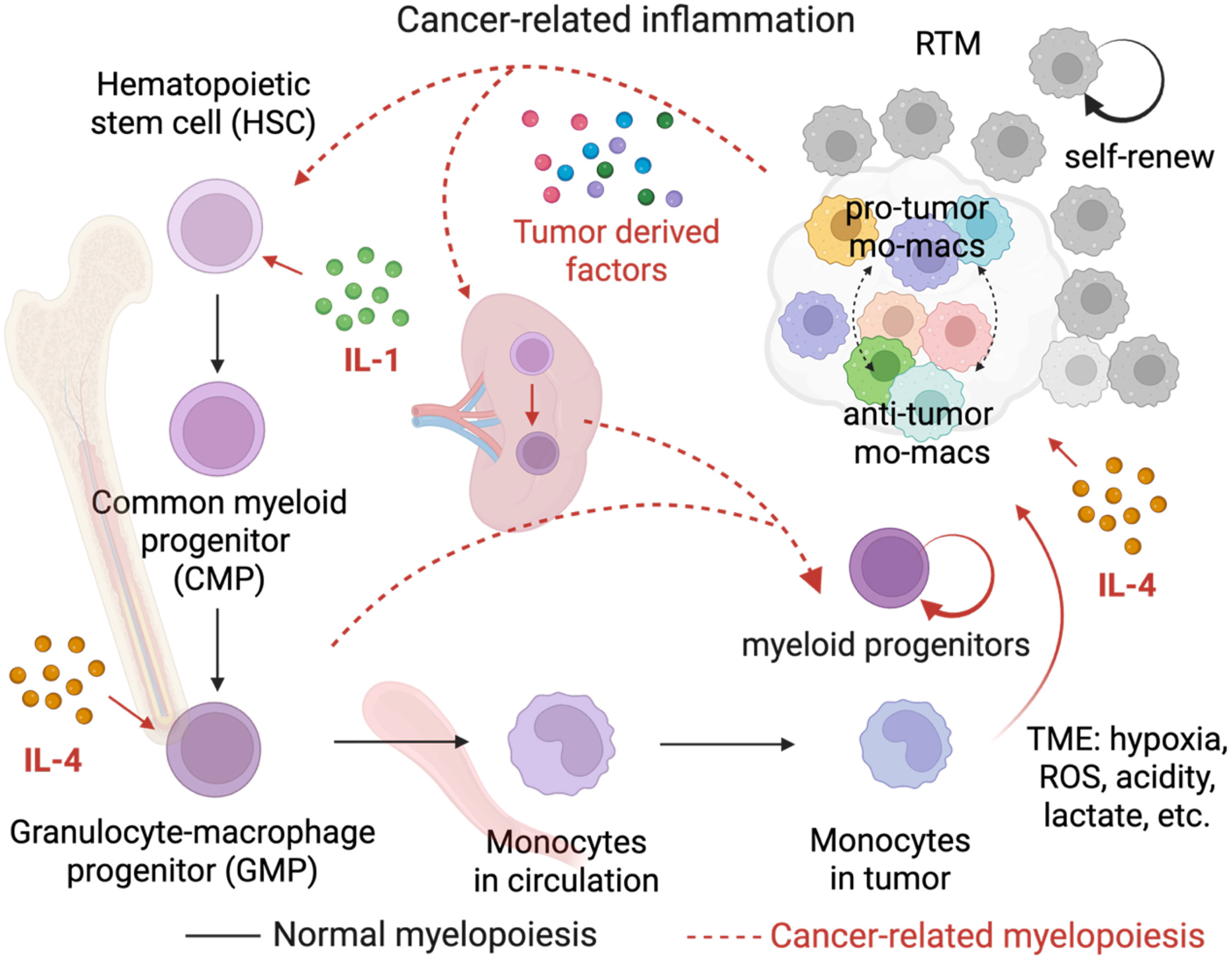
Tumor-derived IL-33 activates basophils, inducing IL-4 production, which in turn signals through the IL-4Rα–STAT6 axis to epigenetically reprogram myeloid progenitors.
As a result, circulating monocytes are preconditioned toward an immunosuppressive phenotype before entering the tumor microenvironment.
Targeting these upstream pathways—using agents such as dupilumab (anti–IL-4Rα) or anakinra (IL-1R1 antagonist)—has shown promising synergy with immune checkpoint blockade in preclinical and early clinical studies.
Toward Precision TAM Targeting
The authors propose a multi-dimensional framework to better define TAM states, incorporating:
- Causal drivers
- Spatial context
- Temporal dynamics
- Signaling activity
- Metabolic state
- Functional output
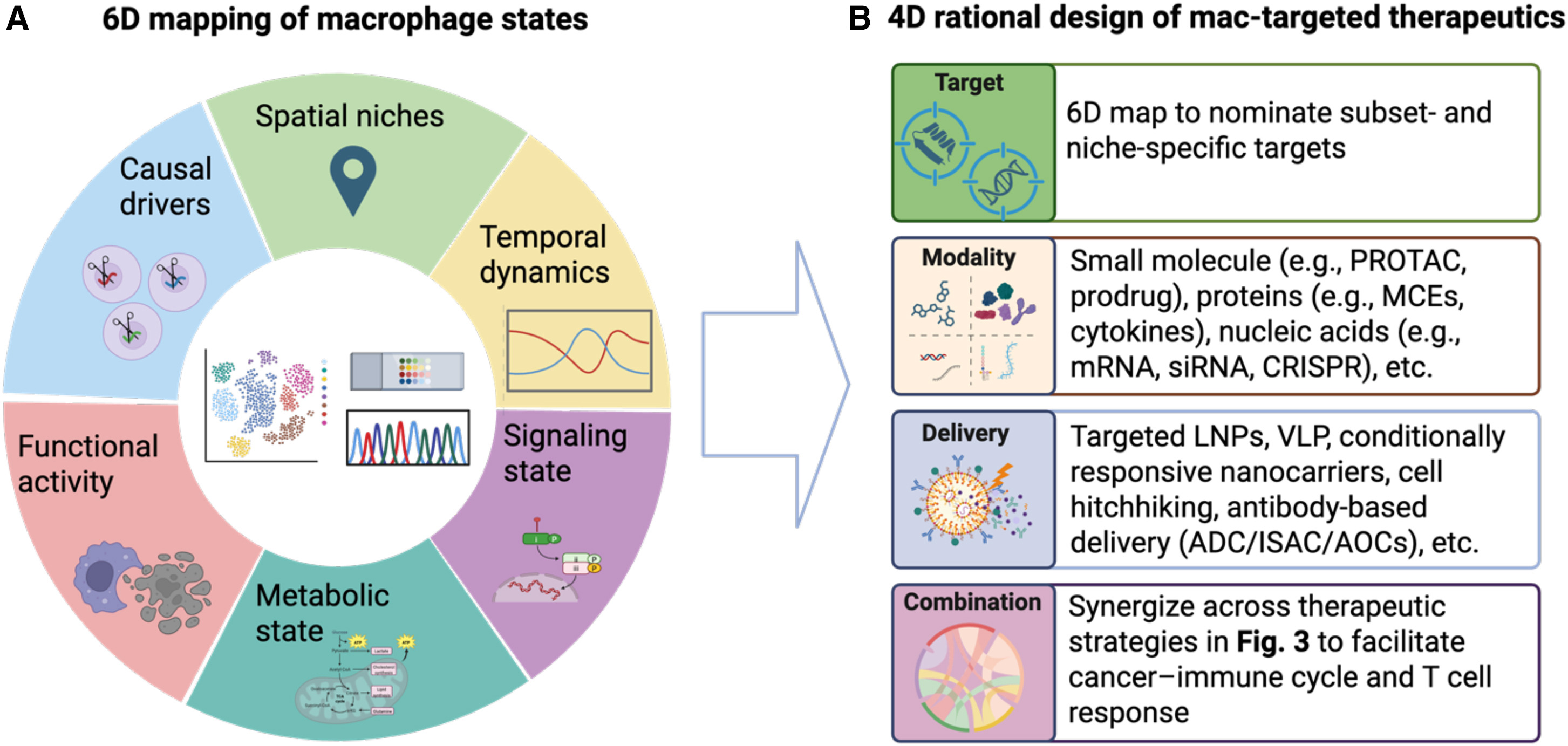
This systems-level understanding is expected to guide the next generation of TAM-targeted therapies, which increasingly rely on engineered modalities such as bispecific antibodies, conditional activation systems, and targeted nanoparticle delivery.
Conclusion
Collectively, these advances mark a fundamental shift in the field:
From viewing TAMs as passive mediators of immunosuppression to recognizing them as dynamic and programmable effectors of anti-tumor immunity
As technologies continue to integrate single-cell biology with therapeutic engineering, TAMs are poised to become central players in the next generation of cancer immunotherapy.
Source: Merad M. & Brown B. et al., Macrophages: Targets for next-generation cancer immunotherapy, Cancer Cell, January 2026


