
Four Structured Paper Analysis Tools to Improve Review Efficiency
In rapidly evolving research fields, traditional keyword searches alone rarely provide a comprehensive understanding of the landscape. Writing a high-quality review requires more than collecting papers — it requires identifying structure, tracing intellectual lineage, and critically evaluating evidence.
Below are four widely used platforms that support different stages of the paper review process, along with practical guidance on how to use them effectively.
1. Open Knowledge Maps
Field-Level Landscape Exploration
When to use it: At the beginning of a project, when entering a new or adjacent research field.
Open Knowledge Maps generates a visual knowledge map based on databases such as PubMed or BASE. Rather than presenting a linear list of results, it clusters publications into thematic groups.
How to use it effectively:
- Go to the website and enter one or two core keywords (avoid long Boolean strings).
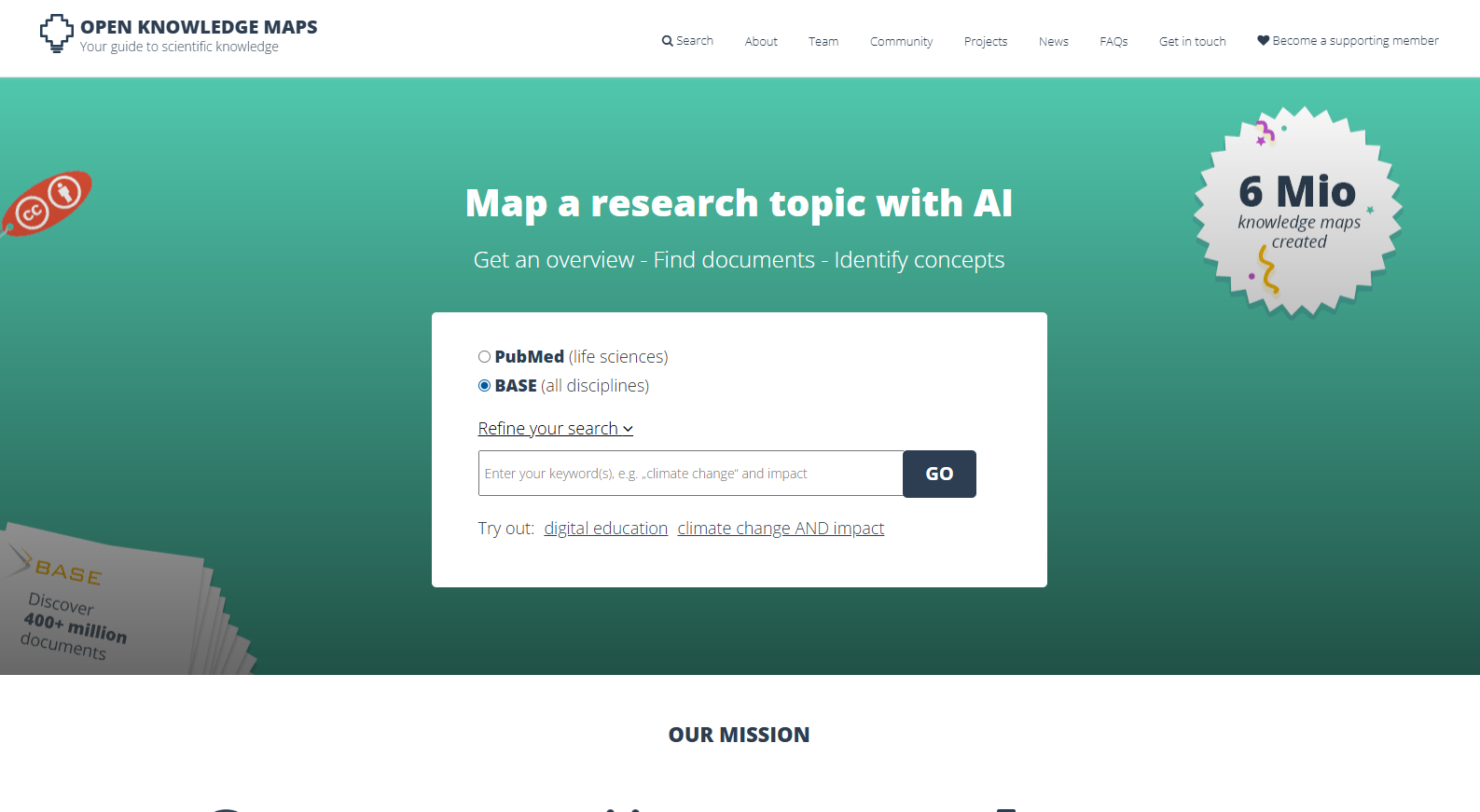
- Select the appropriate data source:
- PubMed is recommended for biomedical sciences.
- BASE may be useful for broader interdisciplinary topics.
- The system generates a 2D map with clustered topic bubbles.
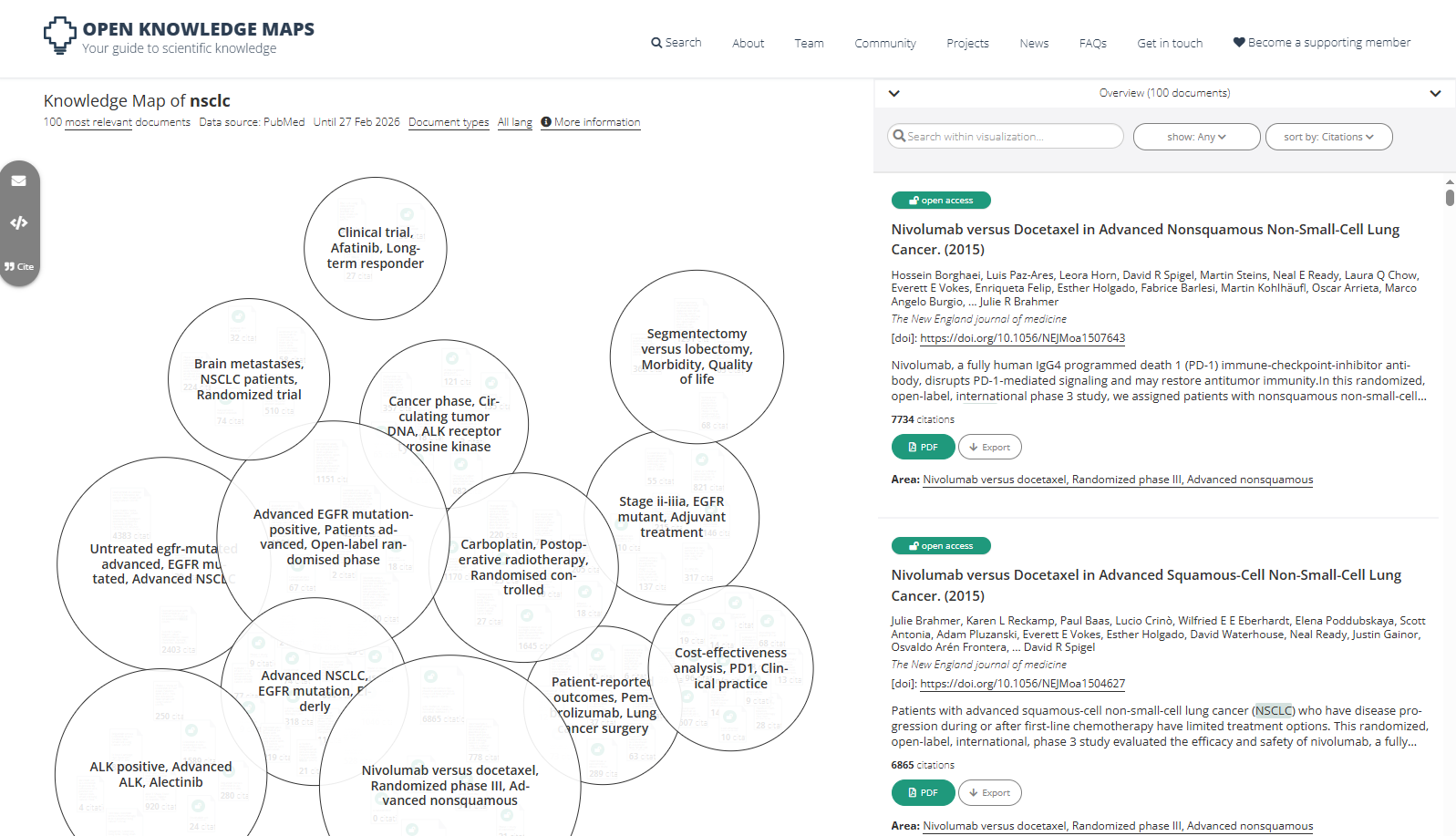
How to interpret the map:
- Larger bubbles indicate areas with a higher volume of publications.
- Smaller clusters may represent emerging or niche research topics.
- Distance between clusters reflects topical similarity.
Clicking on any cluster reveals a curated list of key papers within that theme.
2. Connected Papers
Building a Research Network from a Core Paper
When to use it: After identifying a seminal paper or a highly cited review that defines your area of interest.
Connected Papers constructs a visual similarity graph based on co-citation and bibliographic coupling analysis.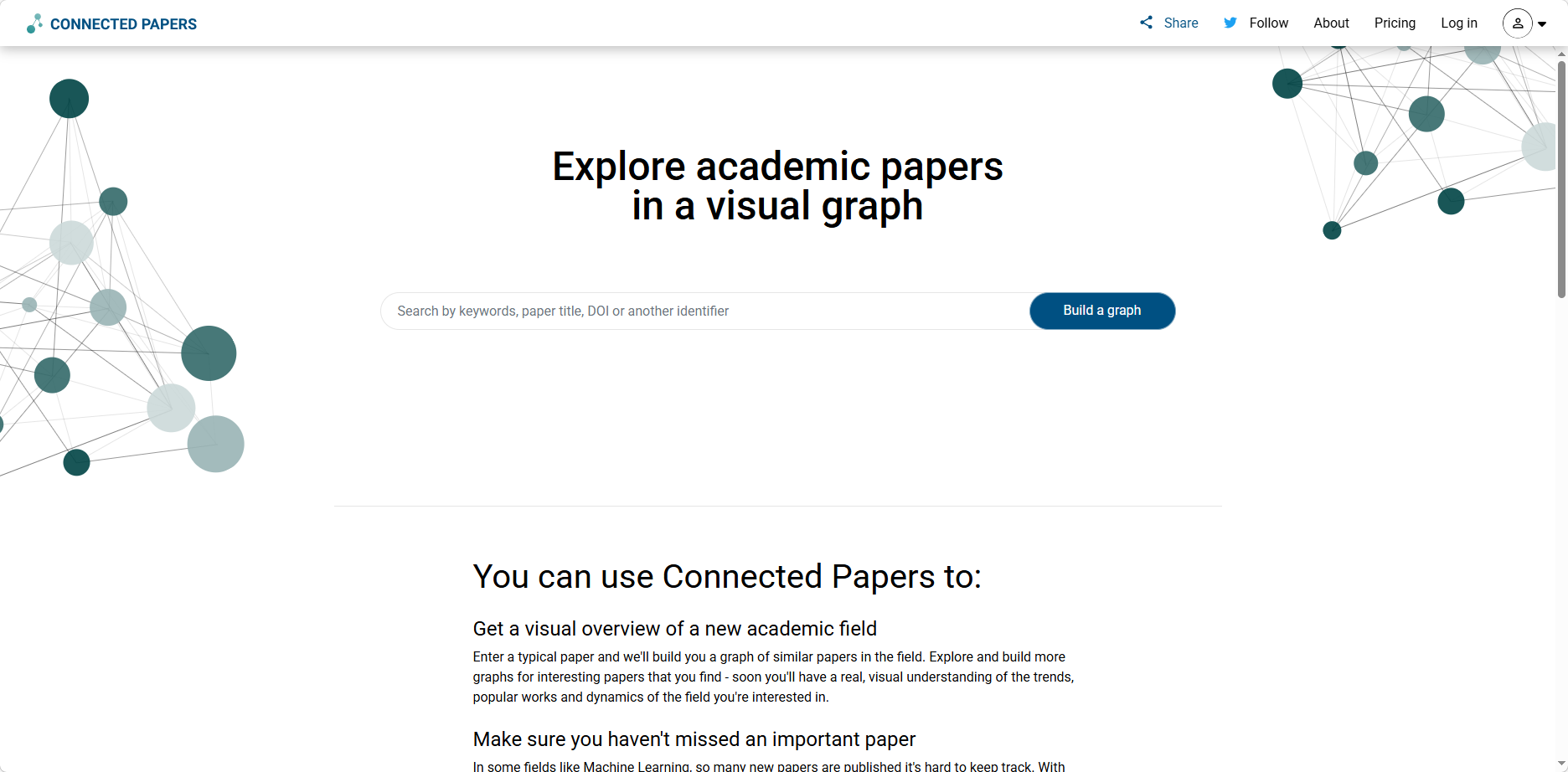
How to use it:
- Enter a DOI, paper title, PubMed link, arXiv link, or URL.
- Select the correct paper from the search results.
- Click “Build a Graph.” Within seconds, a network visualization will appear.
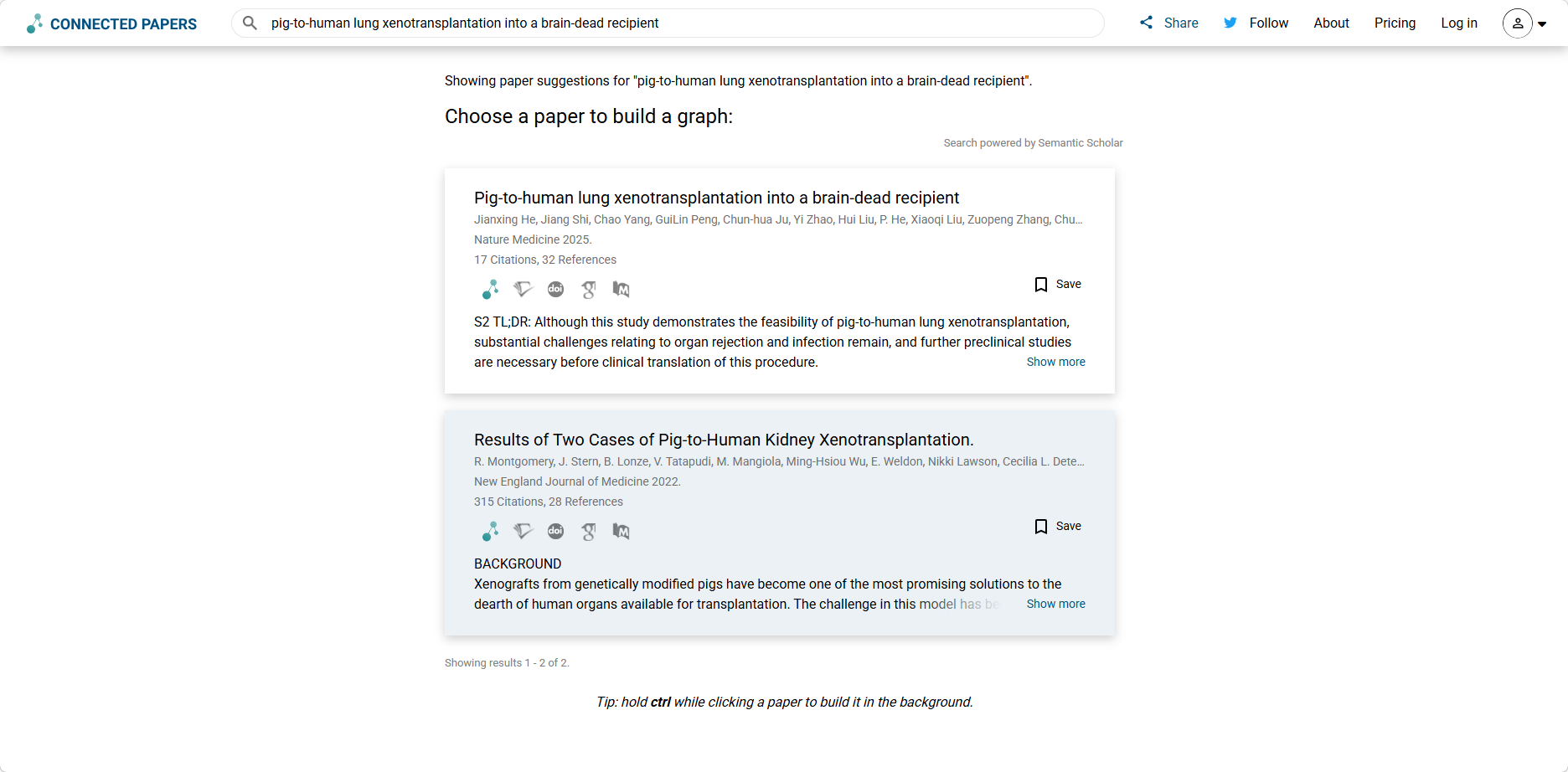
How to interpret the graph:
- Node size reflects citation count.
- Node color indicates similarity to the original paper.
- The purple-outlined node represents your starting paper.
- Clusters often correspond to different research subfields.
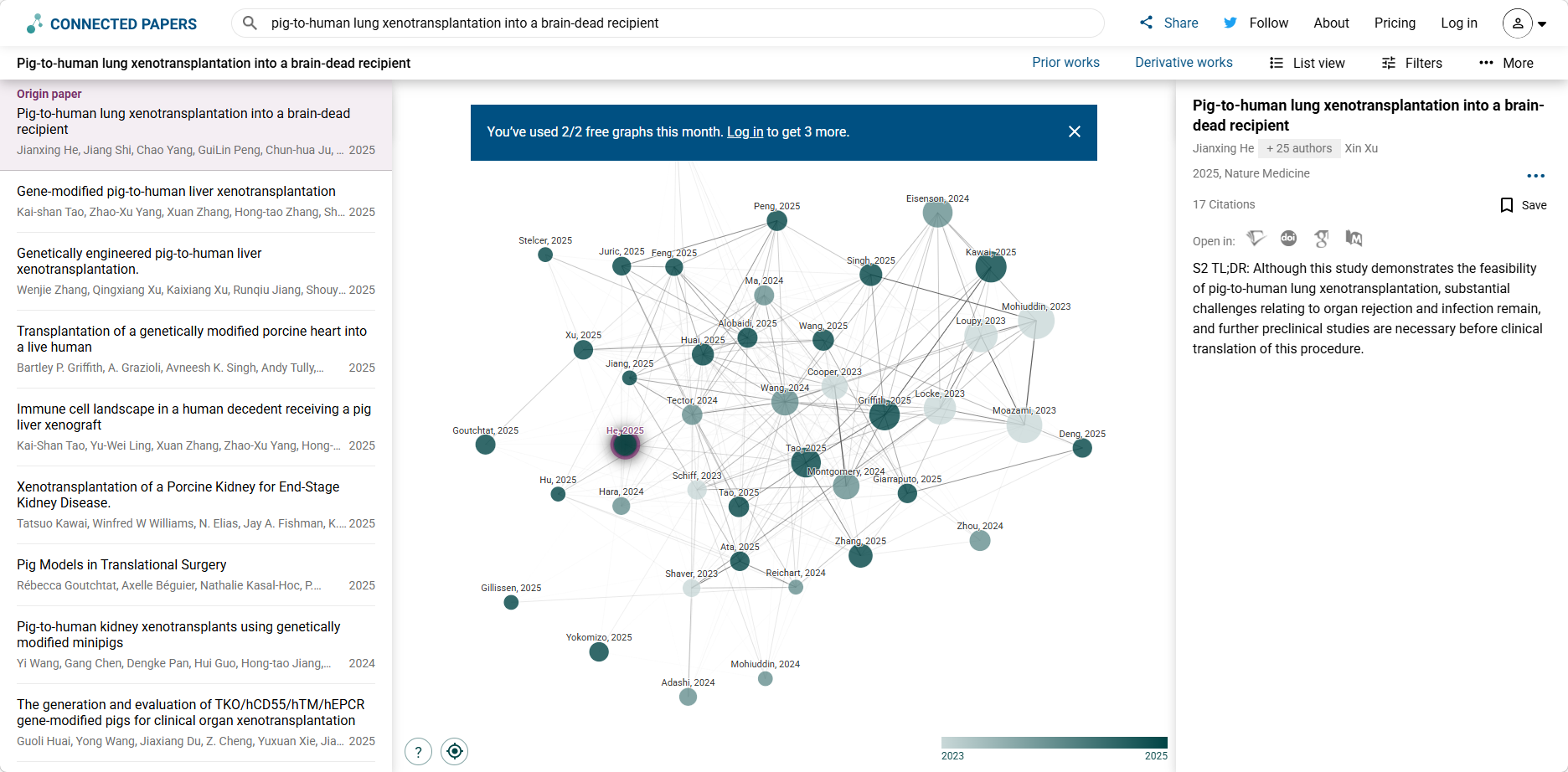
The platform also separates:
- Prior Works (foundational studies frequently cited by the core paper)
- Derivative Works (subsequent studies building upon it)
3. Inciteful
Deep Citation Network Exploration
When to use it: For extended citation analysis, especially if you need a fully free alternative or want to analyze multiple interconnected papers.
Inciteful also builds citation-based networks and offers additional discovery features.
How to use it:
- Enter a paper title, DOI, PubMed link, or arXiv link.
- Confirm the correct paper.
- Review the generated citation graph.
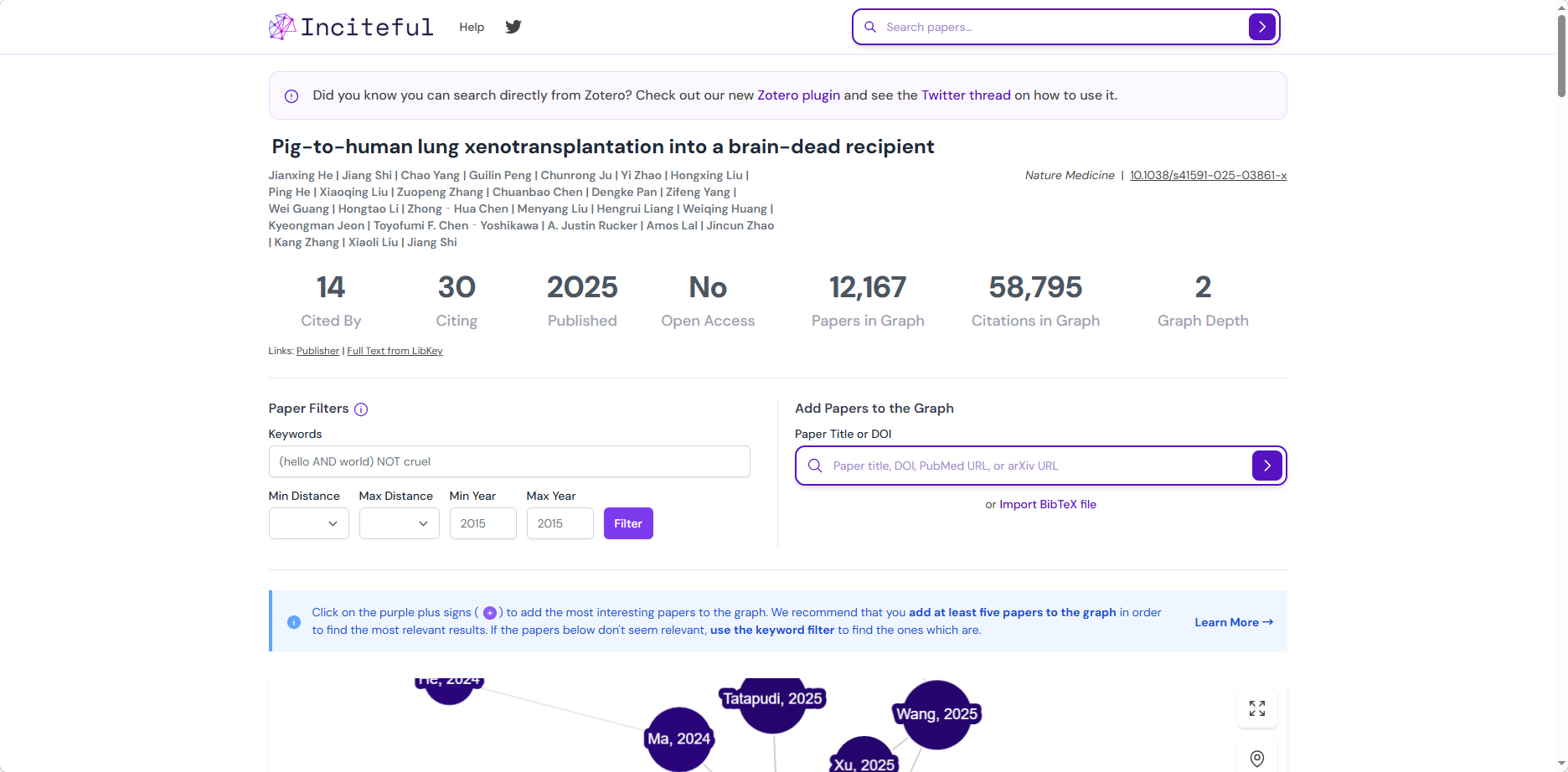
You can also:
- Upload a BibTeX file to analyze a collection of references.
- Use “Paper Discovery” to find high-similarity publications.
- Explore “Author Network” to identify leading contributors in the field.
4. Scite
Evaluating the Reliability of Research Findings
When to use it: Before citing a key study — especially highly cited or controversial work.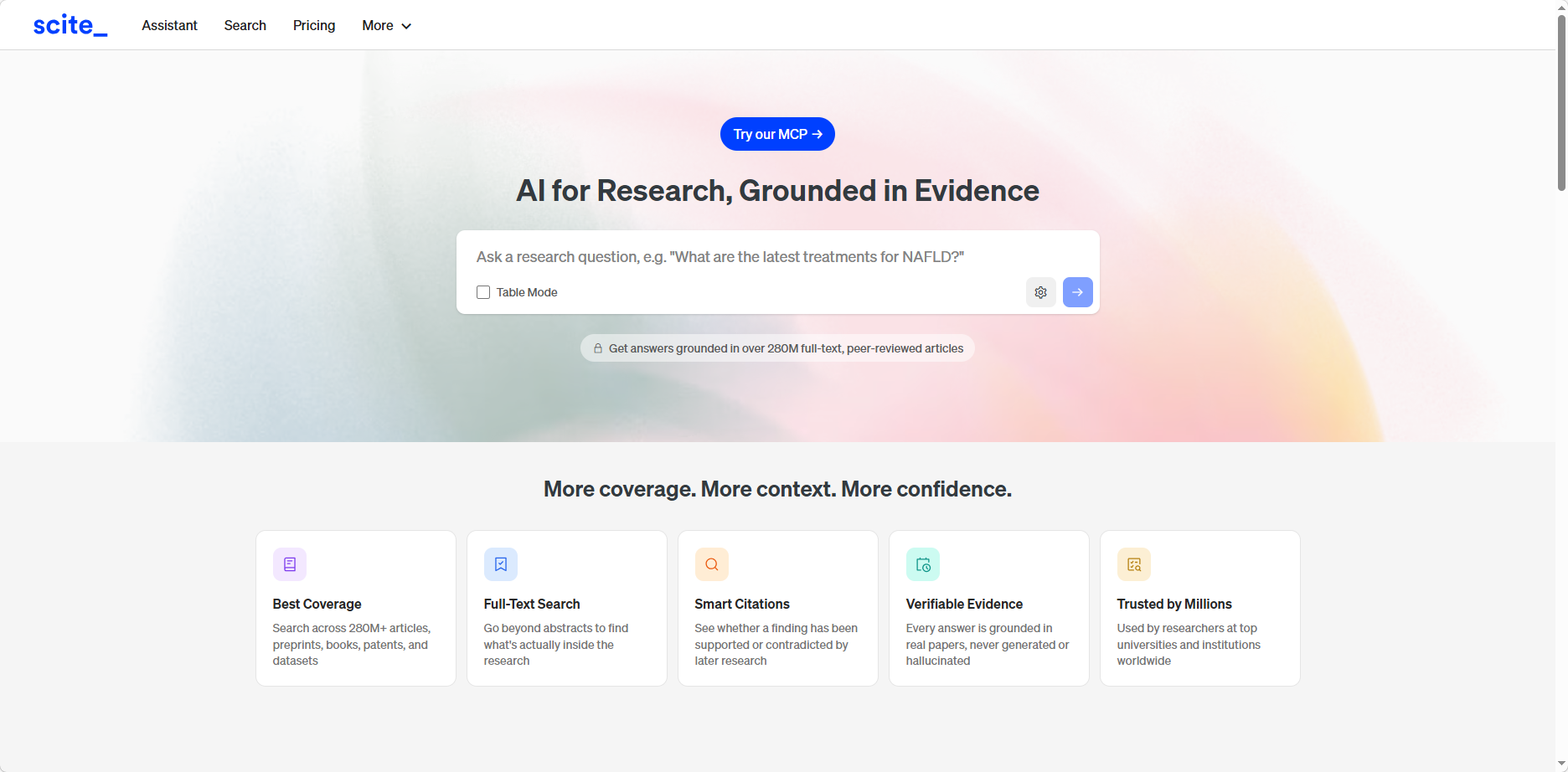
Scite analyzes citation context using machine learning and classifies citations into:
- Supporting
- Contradicting
- Mentioning
How to use it:
- Enter a DOI or paper title.
- Review the citation report generated.
- Examine citation statements in context.
Unlike traditional citation counts, Scite shows how a paper is cited — not just how often. This allows you to:
- Detect scientific controversy
- Identify replication or refutation
- Assess the robustness of conclusions
Integrating These Tools Into a Workflow
An efficient paper review workflow might look like this:
- Use Open Knowledge Maps to understand the overall field structure.
- Select a seminal paper and analyze it with Connected Papers.
- Expand citation analysis using Inciteful.
- Verify key conclusions with Scite.
This structured approach reduces redundancy, improves conceptual clarity, and enhances the reliability of citations.
Effective paper review is not defined by volume, but by organization and critical evaluation.


