
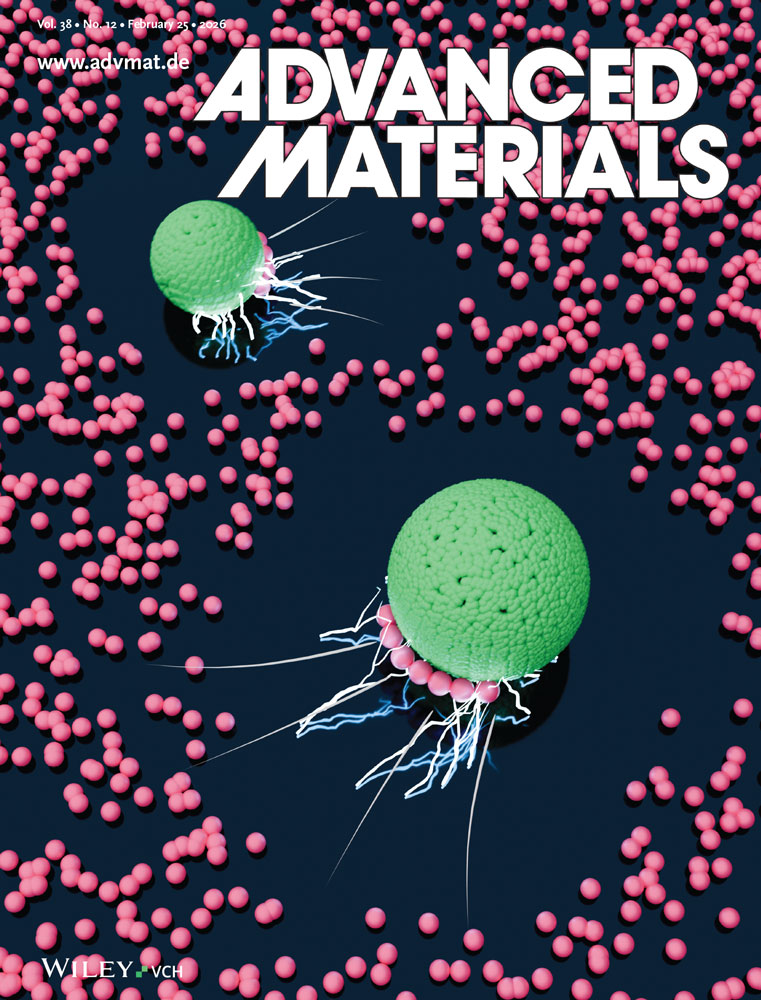
Small-diameter vascular grafts (SDVGs) often fail due to restenosis driven by endothelial cell (EC)-derived PDGF-BB, which shifts vascular smooth muscle cells (VSMCs) toward a synthetic phenotype. Despite mechanistic insights, durable, localized, and cell-specific control of this crosstalk remains elusive. Here, we developed a circRNA-based in situ antibody engineering strategy to functionalize SDVGs, reprogramming ECs into local biofactories that secrete Olaratumab (Ola), a PDGFR-α-neutralizing antibody, to precisely modulate EC-VSMC signaling. In vitro, in situ Ola engineering reversed PDGF-BB-induced VSMC phenotypic switching, markedly suppressing migration, invasion, and excessive extracellular matrix deposition by attenuating MAPK and PI3K-AKT pathways. In the rat model, this approach enabled sustained local antibody secretion for up to 24 days, accelerated endothelialization, and significantly reduced neointimal hyperplasia and graft calcification over 6 months, thereby lowering the risk of SDVG restenosis. CircRNA-based in situ antibody engineering offers a powerful modality to modulate intercellular crosstalk and sustain the VSMC contractile phenotype.
Keywords: VSMC phenotype; circRNA translation; lipid nanoparticles; small‐diameter vascular grafts.


